
Midjourney's recent development trends show that its strategic focus is not blindly pursuing model iteration speed, but focusing on improving user experience and functional practicality. Founder David Holz communicated with users on Discord, shared the company's latest progress, and revealed Midjourney's strategy to deal with fierce competition in the field of AI image generation. Although the release of its new version has been delayed, it provides more time for the improvement of new features and user experience.
New version delayed but more feature-rich
Although Midjourney has made rapid progress in a short period of time, the frequency of new model releases has slowed down significantly recently. The company's latest version, version 6.1, was released in July, and users have experienced a long waiting period since then. Version 7, originally planned to launch before summer, now has a new timeline: it's expected to be ready in one to two months.
Holz said the development team is not rushing to launch new models, but is focusing on improving the accessibility of the technology and the value of the tools for everyday professional use. For example, many users were initially uncomfortable with having to use Discord, and now the company has made the web interface available to all users, including those who want to try AI image generation for free.
Performance improvements and new features
Midjourney plans to launch some new features in the near future to improve user experience:
Multi-image generation: Users will be able to generate 8 images at once, an increase from the current limit of 4.
Image editor: The company is developing a tool that allows users to edit external images (such as photos), including partial repainting (inpainting) and extended painting (outpainting) functions.
3D systems: A more ambitious project is to develop 3D systems that allow users to virtually immerse themselves in AI images. The system will use a new NeRF-like format rather than traditional polygon rendering, NeRF or Gaussian scattering techniques.
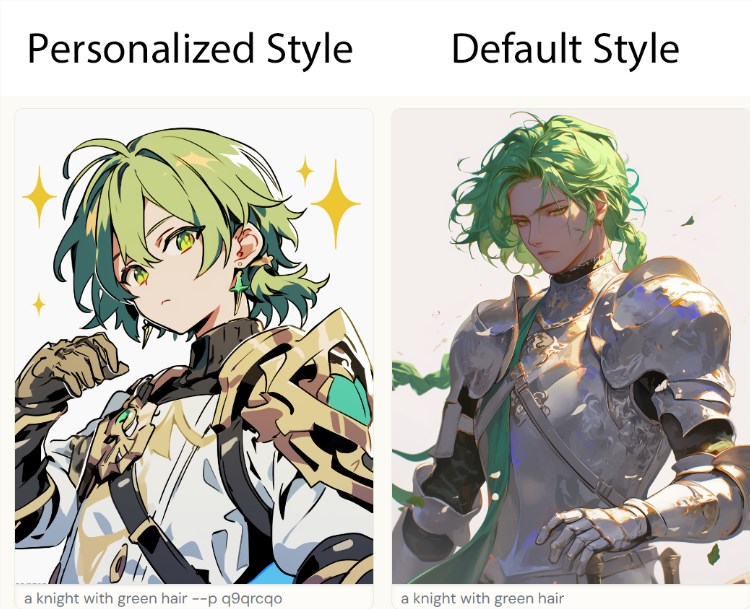
Personalization: Based on user feedback, Midjourney aims to learn more about user preferences to provide more personalized results. This feature has recently been enabled in the Niji model, which specializes in generating anime characters.
Video generation: In addition to still images, Midjourney also plans to get into the field of video generation.
Hardware Development: The company also invests in hardware development in addition to software.
Faced with the rapid development of competitors such as OpenAI, Midjourney has chosen a more stable development path. By launching more practical features and improving user experience, rather than just pursuing model iteration speed, Midjourney hopes to maintain its unique advantages in the highly competitive field of AI image generation.
Product entrance: https://top.aibase.com/tool/midjourneywangyeban
All in all, Midjourney demonstrates its determination and strategy to continue to compete in the field of AI image generation by focusing on improving user experience and developing practical functions. Its steady and steady strategy is expected to make it stand out in the fierce market competition.