
Rabbit R1, this once highly anticipated AI device, has seen shocking usage data five months after its launch. The editor of Downcodes will give you an in-depth understanding of the market performance of this AI device, as well as the challenges and opportunities it faces.
Rabbit R1, a once-high-profile AI device, has seen shocking recent usage data. According to Rabbit founder Jesse Lyu, only 5,000 of the 100,000 buyers currently use the device every day.
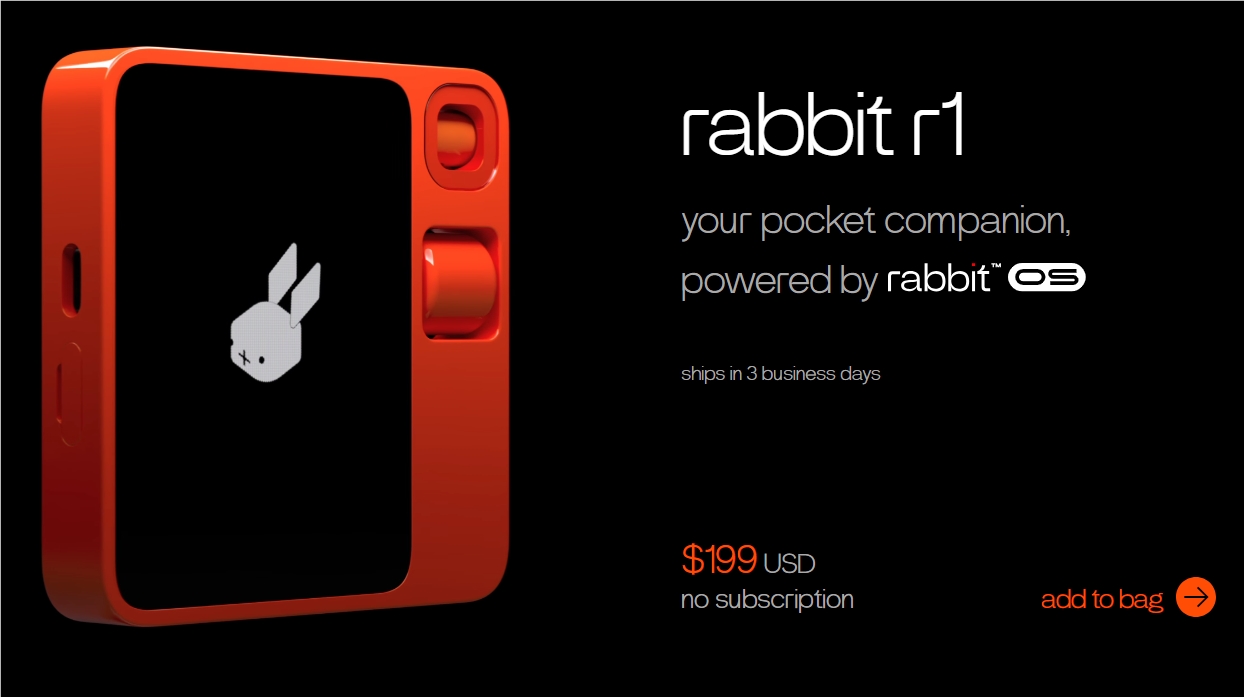
This news comes five months after the launch of Rabbit R1, which is indeed distressing. Lyu mentioned that the device was rushed to market before it was fully ready in order to catch up with big tech companies, and it obviously did not work well.
Looking back at the beginning of this year, the performance of Rabbit R1 at the CES exhibition made people full of expectations, especially with the craze in the field of smart technology, everyone had high expectations for it.
But after it was actually launched, it seemed that everything was not as good as expected. David Pierce, a commentator at The Verge, mentioned in his review, “This whole device feels like it’s broken.” Perhaps because of this, the number of users of R1 has dropped sharply, and there is even news that Humane More AI Pin devices are still being recycled than sold.
In an era where smartphones are already capable of providing pretty good AI capabilities, standalone AI devices seem to be facing a challenge to survive. Although everyone has been discussing whether a single AI device will find a suitable form or whether it will eventually be replaced by smartphones, the reality is that people have to doubt it.
Although the Ray-Ban glasses launched by Meta provide a successful case for independent AI devices to some extent, other AI products do not seem to be going well.
It’s worth mentioning that Rabbit’s upcoming “Full Action Model” update, expected to be released on October 1st, sounds like a good try.
This update allows Rabbit R1 to log into websites and even book flights or order takeout for users. When such a convenient feature is launched, will more users pick up the Rabbit R1 again and be willing to carry another device? However, considering that Apple and Google are also launching local AI functions that can automatically handle on-screen Regarding information and operations between multiple applications, it seems that this prospect is not optimistic.
Highlight:
Currently, there are only 5,000 daily users of Rabbit R1, and the sales data are worrying.
The device was rushed to market without adequate preparation, resulting in a poor user experience.
The AI functions of smartphones are becoming increasingly powerful, and the future of independent AI devices is full of uncertainty.
Rabbit R1's sluggish adoption reflects the serious challenges facing the standalone AI device market. How to strike a balance between functionality and portability may be a question that all independent AI equipment manufacturers need to seriously consider. In the future, it remains to be seen whether Rabbit R1 can turn things around with upcoming updates.