
The editor of Downcodes learned that Intel recently launched a new Xeon 6 processor and Gaudi 3 AI accelerator, aiming to comprehensively enhance its core competitiveness in the fields of artificial intelligence and high-performance computing. Faced with the rapid development of AI technology and the urgent need for efficient and economical infrastructure, Intel's move can be said to be a positive response to market trends and inject new impetus into the development of the industry. The performance improvements of these two products are particularly significant and will bring users a better experience.
Recently, Intel officially launched its new Xeon6 processor and Gaudi3AI accelerator. These two products are designed to enhance the company's competitiveness in the fields of artificial intelligence (AI) and high-performance computing (HPC).
With the rapid development of AI technology, the need for efficient and economical infrastructure has become increasingly urgent, and Intel has responded positively to this.
The Xeon6 processor is equipped with performance cores (P-cores), which can fully double the performance of AI visual processing , and the throughput of the Gaudi3 accelerator has also increased by 20% . This means that these new products will be more handy when handling complex computing tasks. At the same time, Xeon6 also has a higher number of cores and memory bandwidth, which can meet the needs of a variety of application scenarios from edge computing to data centers.
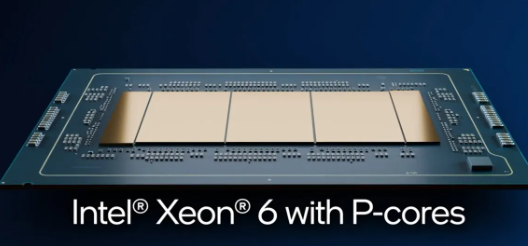
Justin Hotard, executive vice president of Intel's Data Center and AI Division, said that current AI demands are driving major changes in data centers, and the industry needs more choices in hardware, software and development tools. By launching Xeon6 and Gaudi3, Intel hopes to help customers improve performance and security and achieve more efficient AI solutions.
As an accelerator designed for large-scale AI generation, Gaudi3 has 64 tensor processor cores and 8 matrix multiplication engines, which can greatly accelerate the calculation of deep neural networks.
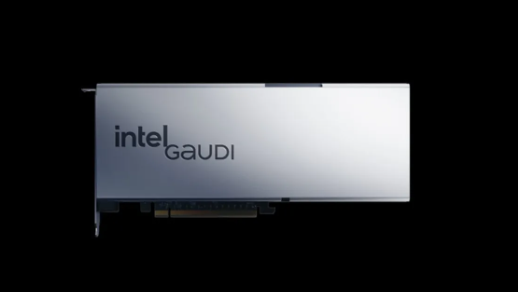
It is equipped with 128GB of HBMe2 memory and 24 200Gb Ethernet ports, providing strong network support. This accelerator is compatible with the PyTorch framework and Hugging Face's advanced models, providing convenience to developers.
In order to reduce the total cost of ownership of enterprises, Intel also cooperated with IBM to launch the Gaudi3 accelerator as a service to help enterprises improve AI performance while reducing operating costs. This move will allow more companies to easily access advanced AI technology.
In the process of large-scale deployment of AI, flexible deployment options and reasonable price-performance ratio are crucial. Intel works with a number of leading equipment manufacturers, including Dell Technologies, Hewlett Packard Enterprise and Super Micro, to jointly develop customized AI solutions to ensure that enterprises can effectively deploy AI technology. In addition, Intel's Tiber developer cloud platform also provides customers with a preview system of Xeon6 to help them conduct technical evaluation.
With the launch of the Gaudi3 cluster, Intel will accelerate the verification and production deployment of AI models, helping more companies seize opportunities in this rapidly developing field.
Highlight:
Intel launches Xeon6 and Gaudi3 chips to improve AI and computing performance.
The performance core of the Xeon6 processor has been significantly improved, and the AI vision processing efficiency has doubled.
? Cooperate with IBM to launch Gaudi3 accelerator service to reduce enterprise usage costs.
All in all, the launch of Intel Xeon 6 processor and Gaudi 3 AI accelerator marks a solid step for Intel in the field of AI, providing strong technical support for promoting the development of AI technology and industrial applications. I believe that in the future, Intel will continue to innovate and bring more surprises to users around the world.