
The editor of Downcodes will give you an in-depth understanding of all aspects of the Internet of Things (IoT). This article will comprehensively interpret the components and application scenarios of the Internet of Things from multiple perspectives such as definition, working principle, core technology, network hub, big data processing, and intelligent terminals, and explore its future development prospects. By reading this article, you will have a systematic and in-depth understanding of the Internet of Things, laying a solid foundation for further learning and application.
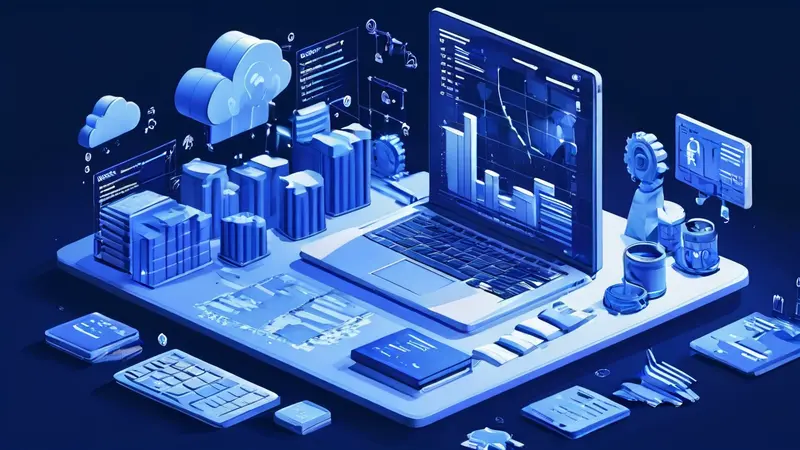
The Internet of Things, or IoT for short, refers to a network that connects any items to each other through various information sensing devices and networks. These items can realize intelligent identification, positioning, tracking, monitoring and management. Core technology, network hubs, big data processing, and intelligent terminals are the key elements that constitute the Internet of Things. The core of IoT technology lies in wireless sensor networks, which enable information between objects to be transmitted and processed in real time and efficiently without human intervention.
The definition of the Internet of Things is very broad. Basically any object that can be identified and transmit data can be included in the scope of the Internet of Things. Its working principle starts with sensors, which are devices that sense their environment and forward the collected data to the network through built-in software and hardware capabilities. The data is then sent to data centers for analysis and processing.
Sensors can be in the form of thermometers, light sensors, pressure sensors, etc., and the end receiving the data may be a personal computer, cloud server, data analysis platform, or even other devices that can respond. IoT devices are usually connected to each other through communication technologies, such as Wi-Fi, ZigBee, LoRa and other wireless technologies. Communication links can also be established through wired connections, such as Ethernet.
The core technologies of the Internet of Things cover many fields, including but not limited to sensor technology, embedded systems, communication technology, data processing and cloud computing. In terms of sensor technology, IoT sensing devices must be accurate, durable, and consume low power in order to operate without human intervention for a long time. Embedded systems refer to the microprocessors and operating systems built into the device, which are responsible for device operation, data collection, preliminary analysis and other functions.
In terms of communication technology, IoT devices require stable and efficient communication protocols to ensure the reliability of data transmission. At the same time, considering energy consumption issues, the communication technology used by IoT devices usually has a high energy efficiency ratio. In addition, big data processing and cloud computing are important supports for the Internet of Things. They process the massive amounts of data collected, mine useful information, and support decision-making and various intelligent applications.
The network hub of the Internet of Things refers to the nodes that connect various devices and networks, such as routers, gateways and other devices. Their role is to transmit data collected by terminal devices such as sensors to the core network, which then dispatches it to the data processing center or directly responds. The network hub of the Internet of Things needs to handle various network protocols, maintain network security, and ensure the continuous and stable operation of the network. Security is particularly important in network hub technology, as any leakage during data transmission could have serious consequences.
Data is one of the most important components of the Internet of Things, and big data processing technology enables the Internet of Things to extract value from massive data. This involves data storage, data management, data security and data analysis. Big data processing of the Internet of Things is not just simple data storage and management, but more importantly, data mining and analysis. Through the use of machine learning, artificial intelligence and other technologies, it can identify patterns, predict trends, and provide users with intelligent decisions. support. In the Internet of Things scenario, big data processing technology has an extremely wide range of applications, from smart homes, industrial automation, to smart cities, precision agriculture, etc., all of which require in-depth analysis of big data.
Smart terminals are the interface for users to interact with the Internet of Things system and occupy a vital position in the Internet of Things. They could be smartphones, smartwatches, or any device with sensors, processing power, and the ability to connect to the Internet. Smart terminals can not only perform simple data collection and sending tasks, but also perform data processing and feedback to a certain extent. In IoT systems, the design of smart terminals needs to take into account ease of use, energy efficiency, and functionality to ensure that users can conveniently control and manage connected devices or systems.
The Internet of Things is becoming an important direction in technological development and has begun to have a profound impact in many fields. From the construction of smart cities to the application of health monitoring, from environmental monitoring to smart home control, the concept of the Internet of Things is gradually being transformed into practical technologies and services in real life. With the continuous advancement of technology, the application of the Internet of Things will be more extensive and the degree of intelligence will be higher in the future.
What is the Internet of Things?
The Internet of Things refers to various physical devices and objects that are connected and communicated through the Internet, thereby realizing the exchange and interoperability of data. It builds an ecosystem including physical devices, sensors, electronic components, software and cloud servers, enabling various devices to connect, communicate and collaborate with each other. The goal of the Internet of Things is to realize intelligent interaction between devices and provide more intelligent, convenient and efficient services and solutions.
What are the application scenarios of the Internet of Things?
The Internet of Things has a wide range of application scenarios, covering many fields. For example, smart home can realize the intelligence of home equipment, and control the switches of home appliances, adjust temperature, etc. through mobile phones; smart agriculture can use sensors and Internet of Things technology to monitor the growth environment of crops and improve the efficiency and quality of agricultural production; smart transportation can Realize the interconnection between vehicles and transportation infrastructure, improve traffic management and travel experience, etc.
What is the future of the Internet of Things?
The Internet of Things has broad prospects in all walks of life. As technology continues to advance and costs decrease, IoT devices will become more and more popular. It is expected that by 2025, the number of IoT devices will exceed 70 billion. The Internet of Things will promote industrial upgrading and transformation, bring more business opportunities to enterprises, and also bring more convenience and intelligent experiences to people's lives.
I hope this article helps you better understand the Internet of Things. As technology continues to develop, the Internet of Things will continue to bring more surprises and conveniences to our lives. The editor of Downcodes looks forward to exploring the infinite possibilities of the Internet of Things with you!