
The collaboration mechanism between government agencies is the key to improving government efficiency. It covers many aspects such as coordination, information sharing, joint actions, supervision and assessment, etc. It aims to break down information islands, improve work efficiency, and achieve optimal allocation of resources. The editor of Downcodes will explain in detail the various components of the cooperation mechanism between agencies and units, and analyze it based on actual cases to help you better understand and apply it.
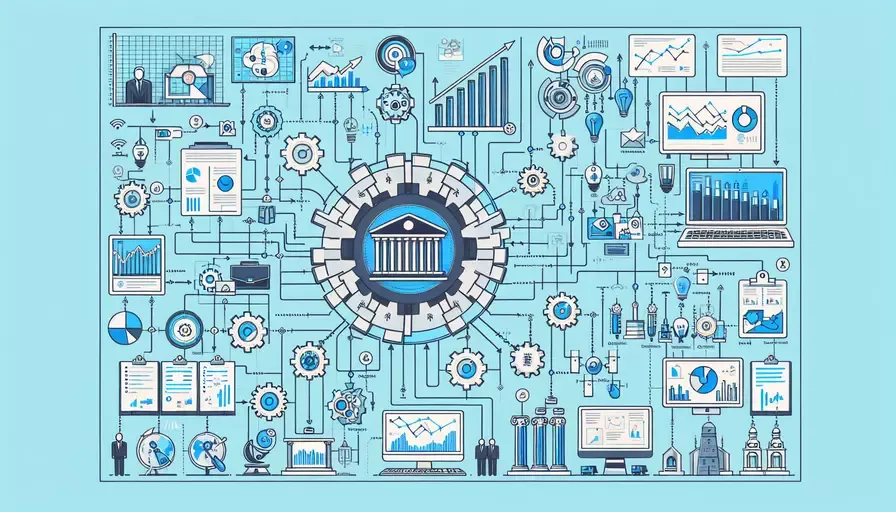
The collaboration mechanism between agencies and units includes coordination mechanism, information sharing mechanism, joint action mechanism, and supervision and assessment mechanism. Among them, the coordination mechanism refers to communication and coordination between various agencies and units through meetings, documents, etc., to ensure that all work is smoothly advanced under unified goals and plans. This mechanism can effectively prevent duplication and conflicts in work and improve administrative efficiency and service quality. For example, joint meetings are held regularly to discuss and solve problems encountered by the respective units at work, and to formulate joint work plans and goals.
The coordination mechanism is the most basic and important part of the cooperation mechanism between agencies and units. Through effective coordination, each unit can ensure that there are no conflicts and duplication of work during the cooperation process, thereby improving work efficiency and effectiveness.
Joint meetings are an important way for face-to-face communication and coordination between agencies and units. Through regular or irregular joint meetings, each unit can discuss and solve work problems and formulate joint work plans and goals. Participants in the meeting usually include the heads or designated representatives of relevant units. The content of the meeting includes work progress reporting, problem discussion and decision-making, etc.
In addition to joint meetings, document communication is also an important part of the coordination mechanism. Through formal documents, units can communicate information such as work requirements, task assignments, and progress. Document communication is formal and normative, ensuring the accurate communication and recording of information.
In some complex and important tasks, setting up special working groups is an effective way to improve coordination efficiency. Special working groups are usually composed of representatives from relevant units and are responsible for the promotion and coordination of specific work. Through special working groups, each unit can pool resources and strength to quickly solve problems and advance work.
The information sharing mechanism is another important component of the collaboration mechanism between agencies and units. Through effective information sharing, each unit can obtain the required information in a timely manner and avoid the problems of information islands and information asymmetry.
Establishing an information sharing platform is the key to realizing an information sharing mechanism. Information sharing platforms can be network systems, databases or other forms of sharing systems. Through these platforms, various units can easily obtain and share information. For example, by establishing a unified administrative information database, various units can share personnel, financial, project and other types of information to improve work efficiency and decision-making quality.
In order to ensure the smooth progress of information sharing, information sharing agreements need to be signed between various units. The information sharing agreement clarifies the responsibilities and obligations of each unit, and stipulates the scope, method and confidentiality requirements of information sharing. By signing an information sharing agreement, each unit can establish a standardized information sharing mechanism to ensure the security and effective sharing of information.
Information sharing is not only a technical issue, but also involves personnel's cognition and ability issues. Through regular information sharing training, staff in each unit can improve their awareness and ability of information sharing, master information sharing technologies and methods, and thus better achieve the goals of information sharing.
The joint action mechanism is the most direct and concrete embodiment of the cooperation mechanism between agencies and units. Through joint operations, units can pool their efforts and resources to jointly solve problems and advance work.
Joint inspection is one of the important forms of joint action mechanism. Through joint inspections, each unit can jointly inspect and supervise a certain field or work, and discover and solve problems. For example, in the field of food safety, multiple relevant units can jointly conduct inspections to ensure that all aspects of food safety are effectively supervised.
In some tasks that require coercive measures, joint law enforcement is an important means of joint action mechanisms. Through joint law enforcement, various units can jointly take enforcement measures to ensure the achievement of work goals. For example, in the fight against illegal and criminal activities, multiple units such as public security, industry and commerce, and taxation can jointly carry out law enforcement to form a powerful strike force.
When responding to emergencies and emergencies, joint emergency response is an important manifestation of the joint action mechanism. Through joint emergency response, each unit can quickly respond and handle emergencies, minimizing losses and impacts. For example, when responding to natural disasters, multiple relevant units can jointly carry out emergency response to ensure the safety of people's lives and property.
The supervision and assessment mechanism is an important means to ensure the effective operation of the coordination mechanism between agencies and units. Through supervision and assessment, each unit can ensure that all work is progressing smoothly according to plans and goals, and problems can be discovered and solved in a timely manner.
Supervision and inspection are an important part of the supervision and assessment mechanism. Through regular and irregular supervision and inspection, each unit can check the operation of the collaboration mechanism and discover and solve existing problems. For example, through regular work inspections, each unit can understand the operation of the collaboration mechanism, discover deficiencies and problems in the work, and make timely rectifications.
Performance appraisal is the core content of the supervision and appraisal mechanism. By assessing the work performance of each unit, the effectiveness and efficiency of the collaboration mechanism can be evaluated. Performance appraisal usually includes the completion of work goals, work quality and efficiency, problem solving, etc. Through performance appraisal, each unit can clarify its work goals and responsibilities and improve work enthusiasm and initiative.
In order to motivate each unit to actively participate in the collaboration mechanism, a reward and punishment system is essential. By establishing a scientific and reasonable reward and punishment system, units with outstanding performance can be rewarded and units with poor performance can be punished. The establishment of a reward and punishment system can mobilize the enthusiasm and initiative of each unit and promote the effective operation of the collaboration mechanism.
The resource sharing mechanism is an important aspect of the collaboration mechanism between agencies and units. Through resource sharing, each unit can make full use of existing resources and improve work efficiency and effectiveness.
In some jobs that require professional skills and knowledge, personnel sharing is an important means to improve work efficiency. Through personnel sharing, various units can share professional talents and technical strength to solve the problem of insufficient human resources. For example, in some technically complex projects, multiple units can jointly dispatch professionals to form joint working groups to improve the technical level and quality of the project.
Device sharing is an important part of the resource sharing mechanism. Through equipment sharing, each unit can make full use of existing equipment resources and avoid duplication of investment and waste. For example, by establishing an equipment sharing platform, various units can share office equipment, experimental equipment, etc., to improve equipment utilization and efficiency.
In some tasks that require a large amount of capital investment, fund sharing is an important means to solve the problem of insufficient funds. Through fund sharing, each unit can jointly raise and use funds to solve the problem of insufficient funds. For example, in some large-scale projects, multiple units can jointly contribute funds to solve the problem of insufficient project funds and improve the smooth progress of the project.
The legal guarantee mechanism is the foundation and guarantee for the coordination mechanism of government agencies and units. Through legal protection, the legality and standardization of the collaboration mechanism can be ensured, and the rights and responsibilities of each unit can be protected.
The formulation of laws and regulations is an important part of the legal guarantee mechanism. By formulating and improving relevant laws and regulations, legal basis and guarantee can be provided for the operation of the collaboration mechanism. For example, by formulating the "Management Measures for the Collaboration Mechanism of Agencies and Units", the responsibilities and obligations of each unit can be clarified and the operation of the collaboration mechanism can be standardized.
Legal training is an important means to improve the legal awareness and capabilities of staff in various units. Through regular legal training, the legal literacy of staff in each unit can be improved, legal awareness and legal concepts can be enhanced, and the legality and standardization of the collaboration mechanism can be ensured.
Legal supervision is an important part of the legal protection mechanism. Through legal supervision, the operation of the collaboration mechanism can be supervised to ensure that each unit works in accordance with the requirements of laws and regulations. For example, by establishing a legal supervision agency, we can supervise and inspect the operation of the collaboration mechanism, discover and correct violations of laws and regulations, and ensure the legality and standardization of the collaboration mechanism.
The cultural construction mechanism is an important part of the collaboration mechanism between government agencies and units. Through cultural construction, the cohesion and centripetal force of each unit can be improved and the effective operation of the collaboration mechanism can be promoted.
Team building is an important part of the culture building mechanism. Through team building, the team awareness and collaboration spirit of staff in each unit can be enhanced, and work efficiency and effectiveness can be improved. For example, by carrying out team building activities, such as team training, team development, etc., the team awareness and collaboration spirit of staff in each unit can be enhanced and the effective operation of the collaboration mechanism can be promoted.
Cultural publicity is an important means of cultural construction mechanism. Through cultural publicity, the cultural literacy and sense of identity of staff in each unit can be improved, and the cohesion and centripetal force of the collaboration mechanism can be enhanced. For example, by carrying out cultural promotion activities, such as cultural lectures, cultural exchanges, etc., the cultural literacy and sense of identity of staff in each unit can be improved and the effective operation of the collaboration mechanism can be promoted.
Cultural assessment is an important part of the cultural construction mechanism. Through cultural assessment, we can understand the cultural construction situation of each unit, discover and solve existing problems, and improve the effect and quality of cultural construction. For example, through regular cultural assessment, the cultural construction situation of each unit is evaluated and inspected, existing problems are discovered and solved, and the effect and quality of cultural construction are improved.
Through the collaboration mechanism in the above seven aspects, agencies and units can improve work efficiency and effectiveness and promote the smooth advancement of various tasks. Each aspect of the collaboration mechanism has its unique role and significance. Each unit can flexibly use and combine different collaboration mechanisms according to the actual situation to ensure the effective operation of the collaboration mechanism.
1. What is the collaboration mechanism between agencies and units?
The collaboration mechanism between agencies and units refers to a cooperation mechanism established between different agencies and units to jointly solve problems and achieve goals. Through the collaboration mechanism, different agencies and units can share resources, information and experience, strengthen communication and coordination, and improve work efficiency and quality.
2. What is the importance of the collaboration mechanism between agencies and units?
The importance of the collaboration mechanism between agencies and units lies in its ability to promote cooperation and coordination between departments and achieve the sharing and optimization of resources. By establishing a collaboration mechanism, the flow and communication of information can be strengthened, information silos and duplication of work can be avoided, and work efficiency and results can be improved. At the same time, the collaboration mechanism can also promote learning and common growth between departments and promote the improvement of the overall work level.
3. How to establish an effective collaboration mechanism between agencies and units?
To establish an effective collaboration mechanism between agencies and units, we first need to clarify the goals and tasks, and clarify the responsibilities and collaborative relationships of each agency unit. Secondly, we must establish sound communication channels and work processes to ensure that information can flow smoothly and work can be carried out in an orderly manner. At the same time, it is also necessary to establish corresponding incentive mechanisms and evaluation systems to encourage cooperation and joint efforts among agencies and units. Finally, it is necessary to strengthen the cultivation of collaboration awareness and team awareness, cultivate the spirit of cooperation and teamwork ability among employees, and lay a solid foundation for the collaboration mechanism of agencies and units.
Hope this article helps you! The editor of Downcodes looks forward to your feedback!