
The Internet of Things (IoT) is profoundly changing our lives. It enables intelligent interactions between things and people and between things by connecting various devices to the Internet. The editor of Downcodes will give you an in-depth understanding of the application of the Internet of Things in fields such as smart homes, health monitoring, smart cities, and industrial automation, as well as its impact on our lives and businesses. This article will give you a comprehensive understanding of the powerful functions and future development trends of the Internet of Things through specific cases and detailed explanations.
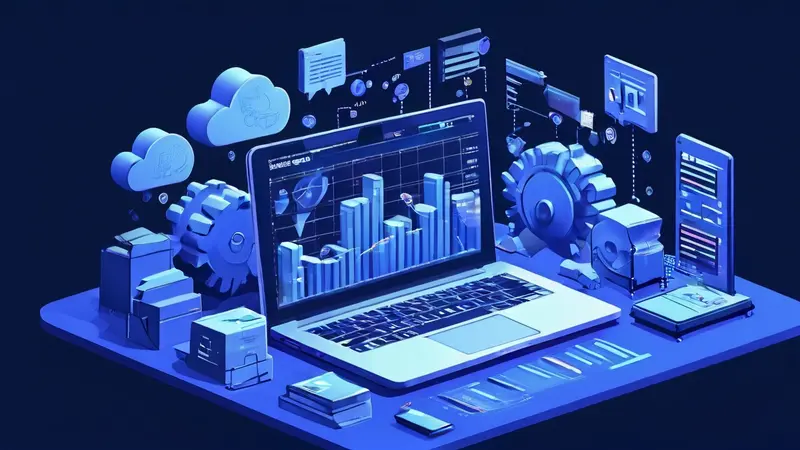
The Internet of Things (IoT for short) is a comprehensive technology system including network connection, intelligent sensing, data processing, and device interaction. It realizes intelligent identification, positioning, tracking, monitoring and management between things and between people and things by installing sensors, controllers or other devices on various objects. In life, the role of the Internet of Things covers many aspects such as health monitoring, smart homes, smart cities, and industrial automation. For example, in the field of smart homes, IoT technology allows home appliances to communicate with each other and work together to improve energy efficiency and comfort; in terms of health monitoring, IoT devices can track patients' vital signs in real time and optimize the allocation of medical resources. Next, we will explore in detail the application and impact of IoT in daily life.
1. Smart home
The application of Internet of Things technology in the field of smart homes has greatly improved the intelligence and convenience of home life. Through IoT devices, such as smart light bulbs, smart sockets, smart security cameras, etc., residents can remotely control home devices through mobile phones or voice assistants.
First, the Internet of Things enables automated interactions between devices in smart homes. For example, smart thermostats and curtain systems can automatically adjust the indoor environment based on outdoor temperature and light intensity without manual intervention, which is both convenient and energy-saving. In addition, smart door locks can bring users a safe and convenient access control experience through the Internet. They can not only unlock remotely through mobile phones, but also monitor the door lock status in real time to improve the security of the home.
2. Health monitoring
The application of the Internet of Things in the field of health monitoring has greatly promoted the development of telemedicine and health management. By wearing heart rate monitors, sleep trackers and other devices, users can continuously monitor their health.
These devices can not only provide users with instant health data feedback, but also transmit the data to the cloud for analysis. Doctors can use this data to provide patients with more accurate diagnosis and treatment suggestions. In addition, for patients with chronic diseases, IoT devices are an effective tool for real-time monitoring and early warning, which can detect potential risks in time and reduce the occurrence of emergency medical incidents.
3. Smart City
The core role of the Internet of Things is to build smart cities and improve urban management and service levels. Under the framework of smart cities, traffic control systems, public safety monitoring, environmental monitoring, etc. can all be supported by IoT technology.
For example, intelligent transportation systems can use the Internet of Things to monitor vehicle traffic in real time, optimize signal light control, and alleviate traffic congestion. The environmental monitoring system collects data such as air quality and noise levels in real time through sensors deployed at various urban nodes to provide decision support for urban environmental management. In terms of public safety, IoT devices such as surveillance cameras, sensors, etc. can assist the police in real-time monitoring of public security conditions and rapid response to emergencies.
4. Industrial automation
In the field of industrial automation, IoT provides a range of solutions to improve production efficiency and safety. By connecting equipment to the Internet of Things, manufacturers can obtain detailed production data to enable predictive maintenance, optimization of production processes, and efficient management of resources.
The Internet of Things enables production equipment to be interconnected and the level of automation is greatly improved. By exchanging information, robots and other equipment on the production line can self-adjust work steps, reduce manual intervention, and reduce error rates in the production process. In addition, by analyzing the data collected from various sensors, companies can predict equipment failures and perform maintenance in advance, thereby reducing unplanned downtime and ensuring production continuity.
The application of the Internet of Things is everywhere in our lives, and its role is gradually extending to our homes, work and even every corner of the city. With the development and application of technology, the Internet of Things will bring more unprecedented changes and conveniences to the development of human society.
What is the Internet of Things? How does it play a role in life?
What is the Internet of Things (IoT)? The Internet of Things refers to the connection of various physical devices and objects through the Internet to realize the transmission and sharing of information. Through the use of sensors, smart devices and Internet connections, the Internet of Things achieves a high degree of integration of the physical and digital worlds.
What is the role of the Internet of Things in life? IoT technology plays many important roles in life. For example, smart homes allow us to control home appliances and equipment through mobile phones, improving the convenience of home life; smart medical equipment can remotely monitor the health status of patients and provide timely medical services; smart transportation systems can optimize traffic flow and reduce traffic congestion. and the probability of accidents; smart agricultural technology can improve the yield and quality of crops and reduce the use of pesticides and water.
How does the Internet of Things improve our quality of life? The emergence of the Internet of Things has made our lives more intelligent and convenient. We can control home devices such as lights, air conditioners, and TVs through our smartphones; smart wearable devices can track health data such as heart rate and step count; and smart home systems can automatically adjust indoor temperature and lighting based on our habits. These technologies improve our quality of life and make us more comfortable and safer.
How does the Internet of Things improve business efficiency and innovation?
What role does the Internet of Things play in improving business efficiency? The Internet of Things can help companies improve production and operational efficiency. By connecting equipment and machines to the Internet, companies can monitor the status and operation of equipment in real time, detect problems in advance and take measures to reduce downtime and production losses. In addition, the Internet of Things can also automate the supply chain and warehouse management of enterprises, improve logistics efficiency and order processing speed, and reduce costs and error rates.
How does the Internet of Things drive enterprise innovation? IoT technology brings many innovation opportunities to enterprises. By connecting devices to the Internet, companies can collect and analyze large amounts of data to understand the usage and performance of products and services to make improvements and optimizations. In addition, the Internet of Things enables companies to develop new smart products and services to meet consumer needs and create new business models and profit models.
What is the impact of the Internet of Things on corporate competitiveness? The impact of the Internet of Things on corporate competitiveness is positive. Through the application of IoT technology, enterprises can improve efficiency, reduce costs, optimize products and services, and gain a competitive advantage in the market. At the same time, the Internet of Things can also help companies better understand and meet customer needs, provide personalized products and services, and enhance customer stickiness and loyalty.
All in all, IoT technology is constantly developing and its application scenarios are becoming increasingly widespread. In the future, the Internet of Things will continue to bring more convenience and changes to our lives, and promote social progress and economic development. I hope this article by the editor of Downcodes can help you better understand the Internet of Things and its applications.