
Teamwork is an indispensable part of modern work. It can significantly improve efficiency, promote innovation and bring many positive impacts. The editor of Downcodes will elaborate on the role and significance of teamwork from six aspects: efficiency improvement, innovation promotion, leadership development, adaptability enhancement, stress reduction, and satisfaction and loyalty improvement. This article will provide an in-depth analysis of how team collaboration can help team members do their jobs better and ultimately improve overall team performance.
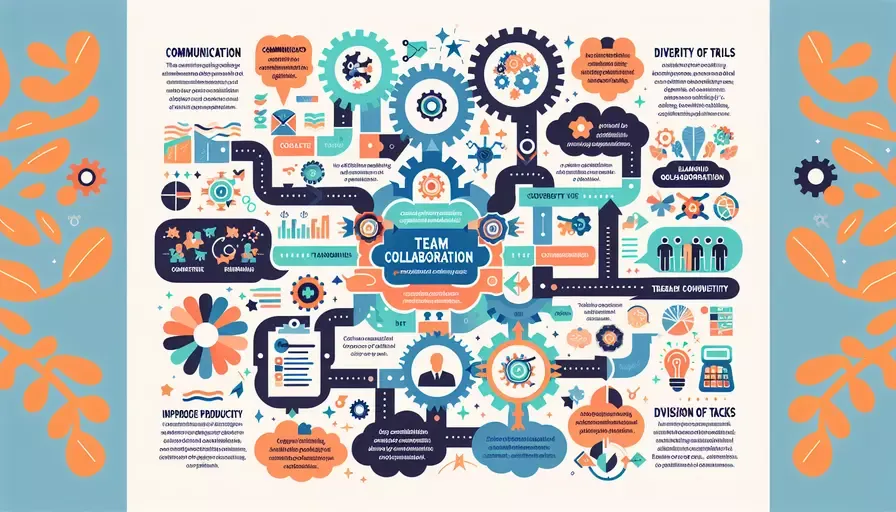
The role and significance of teamwork is mainly reflected in: improving efficiency, promoting innovation, cultivating leadership, enhancing adaptability, reducing work pressure, and improving satisfaction and loyalty.
First of all, improving efficiency is a significant role of teamwork. In a team, work can be broken down into smaller parts and then completed by members with the appropriate skills and experience. This division of labor can make the work process smoother, avoid duplication of work and waste of time, and greatly improve work efficiency.
I. Improve efficiency
The first function of teamwork is to improve efficiency. In a team, members can be assigned work based on their abilities and expertise, so that everyone can maximize their potential. For example, if a project requires skills in three areas: design, programming, and marketing, then these three tasks can be assigned to the people who are best at those areas. In this way, everyone can be most effective in their areas of expertise, thereby improving the efficiency of the entire team.
In addition, through team collaboration, each member can learn from each other and share knowledge and experience, which also helps improve the team's work efficiency. For example, an experienced member can mentor new employees, helping them quickly familiarize themselves with the job and avoid making mistakes. In this way, the work efficiency of new employees will also be greatly improved.
II. Promote innovation
The second role of teamwork is to promote innovation. In a team, each member has the opportunity to put forward their own ideas and suggestions, which helps stimulate innovative thinking. For example, a designer might come up with an innovative design concept, and a marketer might come up with a unique marketing strategy. These different ideas and suggestions can collide with each other and inspire more innovative thinking.
In addition, through team collaboration, members can share resources and information, which also contributes to innovation. For example, one member may learn about a new technology or market trend, and he or she can share this information with other members so that the entire team can innovate based on this new information.
III. Develop leadership
The third role of teamwork is to develop leadership. In a team, each member has the opportunity to take on a leadership role, which helps develop their leadership skills. For example, a member may be selected as the project leader. He needs to be responsible for coordinating the work of the team and solving problems within the team, which will help him improve his leadership skills.
In addition, through teamwork, members can learn how to work effectively with others, how to deal with interpersonal relationships, and how to resolve conflicts, which are all important components of leadership.
IV. Enhance adaptability
The fourth function of teamwork is to enhance adaptability. In a team, members need to adapt to a variety of different working environments and working modes, which helps improve their adaptability. For example, a team may need to complete a project in a short period of time, requiring members to quickly adapt to a high-pressure work environment. Or, a team may need to adopt a completely new way of working to complete a task, which requires members to quickly adapt to the new working model.
In addition, through teamwork, members can learn how to deal with changes and uncertainty, which also helps improve their adaptability.
V. Reduce work stress
The fifth function of teamwork is to reduce work stress. In a team, members can share work tasks, which helps reduce their work stress. For example, a project may require a lot of work, and if only one person is working on it, it can be extremely stressful. However, if these tasks can be distributed among the team, each person's workload will be relatively reduced and the stress will be reduced accordingly.
In addition, through teamwork, members can get support and help from others, which also helps reduce their work stress. For example, when a member encounters difficulties, he can ask other members for help, and other members can provide solutions or directly help him solve the problem, which can relieve his stress.
VI. Improve satisfaction and loyalty
The sixth role of teamwork is to increase satisfaction and loyalty. In a team, members can gain a sense of belonging and identity, which helps increase their satisfaction and loyalty. For example, when a team successfully completes a project, all members will feel very satisfied and proud. They will have a deeper sense of identification with the team and higher satisfaction with their work.
In addition, through teamwork, members can build deep friendships, which also helps to increase their loyalty. For example, after a long period of cooperation, members may develop deep friendships, and they will be more willing to contribute to the team and have higher loyalty to the team.
In general, teamwork has multiple functions and meanings. It can improve efficiency, promote innovation, cultivate leadership, enhance adaptability, reduce work stress, and enhance satisfaction and loyalty. Therefore, we should fully realize the importance of teamwork and strive to improve the effectiveness of teamwork.
1. Why is teamwork important to the role and significance of organizations?
Teamwork is very important to organizations because it promotes cooperation among employees and increases work efficiency and productivity. Through teamwork, employees can work together to solve problems and share knowledge and experience, thereby improving their ability to innovate and solve complex problems.
2. How does team collaboration improve employees’ job satisfaction and team cohesion?
Teamwork can improve employee job satisfaction and team cohesion. When employees feel they are an important part of the team and their contributions are recognized and appreciated, they feel more motivated and satisfied. In addition, teamwork can also promote mutual support and trust among employees and enhance team cohesion.
3. How to resolve conflicts and promote good communication in team collaboration?
Conflicts and communication issues inevitably arise in team collaboration. To resolve conflicts, team members need to learn to listen to and respect each other's opinions, as well as find common solutions. In addition, it is important to establish an open and transparent communication channel so that team members can freely share opinions and feedback in order to solve problems in a timely manner and improve work processes.
Hope this article helps you! The editor of Downcodes is committed to sharing practical tips and knowledge, so stay tuned for more exciting content!