
Project resource management is a key link in the successful implementation of the project, and the resource breakdown structure (RBS) is a powerful tool for efficient management of project resources. The editor of Downcodes will explain in detail the creation, application, role, challenges and solutions of RBS to help you improve your project management level.
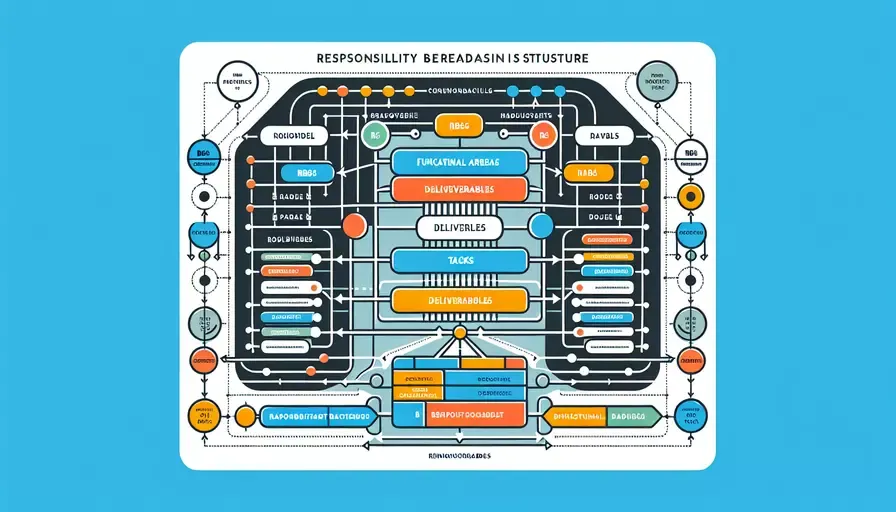
RBS (Resource Breakdown Structure) in project management is a tool used to classify and hierarchically display project resources, ensure efficient and orderly resource allocation, promote resource management and monitoring, and facilitate budget preparation and cost control. It helps project managers better understand and manage project resources by decomposing all resources required for the project (including human resources, equipment, materials, etc.) according to a certain logic and level. Among them, ensuring efficient and orderly resource allocation is a core role of RBS. During the project implementation process, RBS can clearly identify the specific resources required for each task or activity, and then allocate resources reasonably to avoid resource waste and conflicts and ensure that the project can proceed smoothly.
To create an RBS, you must first clarify the goals and scope of the project, and then identify all the resources required during project implementation based on the project's work breakdown structure (WBS). Next, these resources are grouped by category and continue to be subdivided until they can no longer be divided to form a resource decomposition tree. This process requires not only the participation of the project manager, but also the joint efforts of all stakeholders.
When creating an RBS, it is important to consider how resources are classified. Generally speaking, resources can be classified by function (such as management, engineering, manufacturing, etc.), by type (such as human resources, materials, equipment, etc.) or by the department to which they belong (such as IT department, human resources department, etc.). The classification method chosen should be determined based on the characteristics and management needs of the project.
Using RBS can bring many aspects of value to project management. First, it provides a systematic method to identify, classify and organize project resources, helping project managers to fully understand the needs of project resources. Secondly, RBS helps optimize resource allocation. By clarifying the resources required for each task, resource waste and conflicts can be avoided and resource utilization efficiency improved. In addition, RBS is also an important basis for budget preparation and cost control. Through detailed decomposition of resources, project costs can be estimated more accurately and project budgets can be effectively controlled.
In terms of resource management, RBS can also promote cross-department communication and collaboration. By clarifying the resources each department is responsible for, cooperation between departments can be strengthened to ensure efficient use of resources.
The role of RBS in project management cannot be underestimated. It not only helps the project team identify and manage the various resources required for the project, but also improves the transparency and fairness of resource allocation. More importantly, RBS can be used as a tool for project monitoring and control. Through regular review of resource usage, resource management problems can be discovered and solved in a timely manner to ensure that the project proceeds smoothly as planned.
For example, when executing a project, you can easily check whether resources are allocated and used as planned by checking the RBS. If a shortage or waste of resources is found, the project manager can immediately take measures to make adjustments to ensure the achievement of project goals.
Although RBS has important value in project management, it also faces some challenges in practical application, such as the complexity of resource classification and the variability of resource information. Faced with these challenges, project managers need to adopt corresponding strategies to deal with them. For example, ongoing communication and collaboration can ensure timely updates and accuracy of resource information. At the same time, adopting flexible resource management methods, such as allocating resources on demand, can improve the flexibility and efficiency of resource management.
In addition, using modern project management software is also one of the effective means to deal with RBS challenges. These software can not only help project managers create and maintain RBS efficiently, but also provide resource monitoring and analysis functions to help project managers better manage project resources.
RBS is a very important tool in project management. It provides strong support for the efficient management and utilization of project resources by systematically decomposing and classifying project resources. Although there may be some challenges in practice, with effective strategies and the support of modern technology, project managers can fully leverage the value of RBS and ensure the successful implementation of the project.
What is Project Management RBS? Project Management RBS (Risk Breakdown Structure) is a tool for project risk management. It is a hierarchical structure used to identify, classify, and organize project risks. RBS helps the project team better understand the risks that may arise in the project and formulate corresponding risk response strategies. RBS usually contains multiple levels, from high-level risk categories to specific risk events, helping the project team comprehensively consider project risks.
What is the role of RBS? The role of RBS is to help the project team comprehensively understand and manage project risks. By using RBS, project teams can systematically identify and classify project risks to better formulate corresponding risk management strategies. RBS can also help project teams prioritize high-risk project activities and increase the likelihood of project success. In addition, RBS can provide project teams with a shared risk vocabulary, facilitating communication and understanding between teams.
How to create a project management RBS? Creating a project management RBS requires the following steps:
Determine the risk category of the project: Based on the characteristics and needs of the project, determine the risk category suitable for the project, such as technical risk, supplier risk, market risk, etc. Develop an RBS hierarchy: Based on the project's risk categories, establish a hierarchy to classify and organize risks from high-level to specific. Identify specific risk events: Under each risk category, identify specific risk events, such as technical failures, supply delays, changes in market demand, etc. Assign risk probability and impact: Assign probability and impact levels to each risk event to assess its degree of risk. Develop risk response strategies: According to the degree of risk, formulate corresponding risk response strategies, including avoidance, mitigation, transfer and acceptance, etc.Through the above steps, the project team can create an effective project management RBS for identifying, classifying and managing project risks.
I hope the explanation by the editor of Downcodes can help you better understand and apply RBS. Proficiency in RBS will effectively improve your project management capabilities and help project success!