

Recently, I have been developing a permission management module for a backend management system, which involves data processing logic of various tree structures, such as: addition, deletion, modification, query, etc.; compared with ordinary Array structure data, the processing of tree structure is not as intuitive as array, but it is not that complicated. It requires one more step - recursive search to perform deep traversal of data. So here, the blogger will also summarize the development process I’ll share the method I came up with. This article will give you a thorough understanding of JS tree structure data processing:
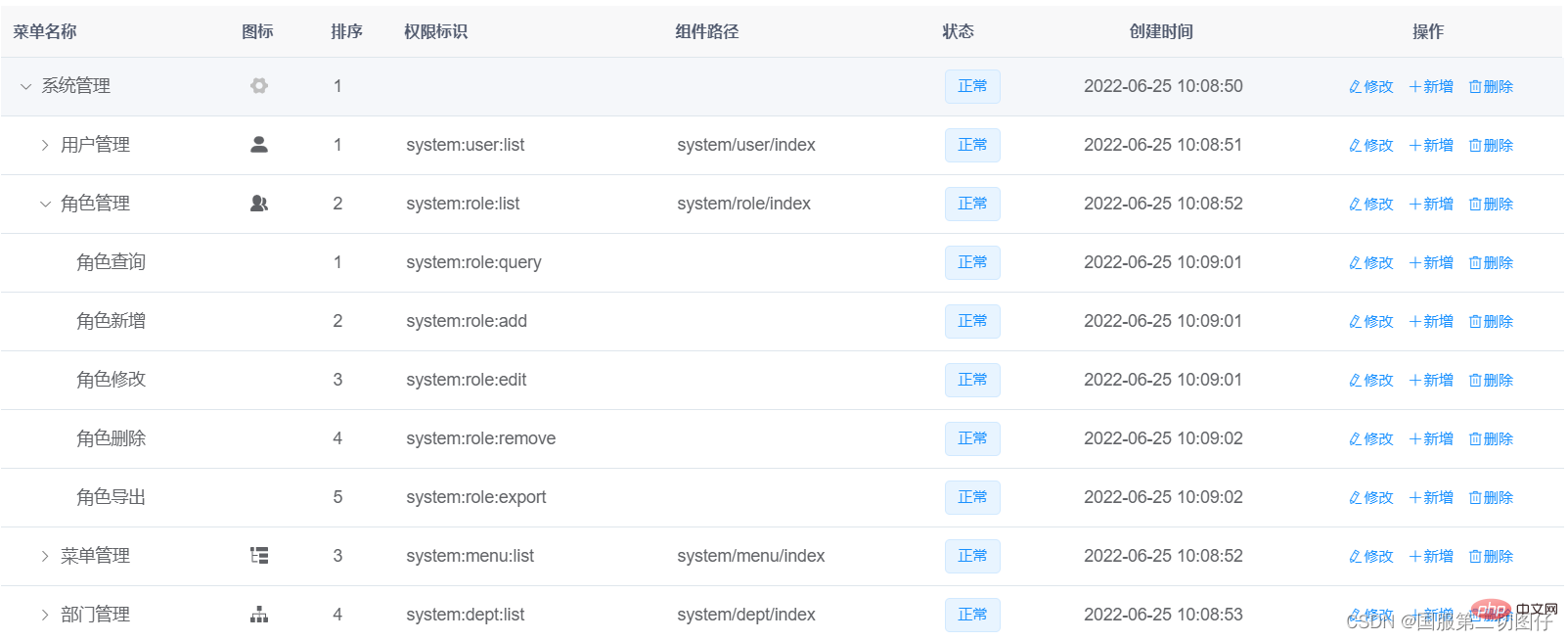
Data structure example
let data = [{
        id: 1,
        label: 'Level 1',
        children: [{
          id: 4,
          label: 'Level 1-1',
          children: [{
            id: 9,
            label: 'Level 3 1-1-1'
          }, {
            id: 10,
            label: 'Level 3 1-1-2'
          }]
        }]
      }, {
        id: 2,
        label: 'Level 2',
        children: [{
          id: 5,
          label: 'Level 2-1'
        }, {
          id: 6,
          label: 'Level 2-2'
        }]
      }, {
        id: 3,
        label: 'Level 3',
        children: [{
          id: 7,
          label: 'Level 2 3-1'
        }, {
          id: 8,
          label: 'Level 3-2'
        }]
}]; to find the specified node in the tree structure and add a new child node. The code is as follows:
const appendNodeInTree = (id, tree, obj) => {
  tree.forEach(ele=> {
    if (ele.id === id) {
      ele.children ? ele.children.push(obj) : ele.children = [obj]
    } else {
      if (ele.children) {
        appendNodeInTree(id, ele.children, obj)
      }
    }
  })
  return tree
} Find the specified node in the tree structure and delete the node. The code is as follows
const removeNodeInTree=(treeList, id)=> { // Remove elements from the array (tree structure) by id if (!treeList || ! treeList.length) {
    return
  }
  for (let i = 0; i < treeList.length; i++) {
    if (treeList[i].id === id) {
      treeList.splice(i, 1);
      break;
    }
    removeNodeInTree(treeList[i].children, id)
  }
} to recursively search and modify the status of a node. The code is as follows:
const updateNodeInTree=(treeList,id, obj)=> {
      if (!treeList || !treeList.length) {
        return;
      }
      for (let i = 0; i < treeList.length; i++) {
        if (treeList[i].id == id) {
          treeList[i]= obj;
          break;
        }
        updateNodeInTree(treeList[i].children,id,obj);
      }
} recursively to find a node in the tree node, code:
const findNodeInTree = (data, key, callback) => {
      for (let i = 0; i < data.length; i++) {
        if (data[i].key == key) {
          return callback(data[i], i, data)
        }
        if (data[i].children) {
          findNodeInTree (data[i].children, key, callback)
        }
      }
    }

    //The method to store the found node let Obj={}
    findNodeInTree(data, key, (item, index, arr) => {
      Obj = item
    })

    // This is the node to be found corresponding to Obj console.log(Obj)