IOT_AirQuality_Drone
1.0.0

|
As part of my end -of -drones end -of -drone work, in Medialab_ Lpwan, I was announced by Lorawan's technology. With it, I quickly understood the potential to work in an air quality sensor to mount on a long rage drone to be used as a mobile platform and measure kilometers away hostile atmospheres in case of an accident where it was dangerous to send a team of people. As a result, the on-board sensor was born that I am going to show you as a node connected by Lora, synchronizable with The Things Network, to ride the drone that I built without the coverage being a limiting factor.
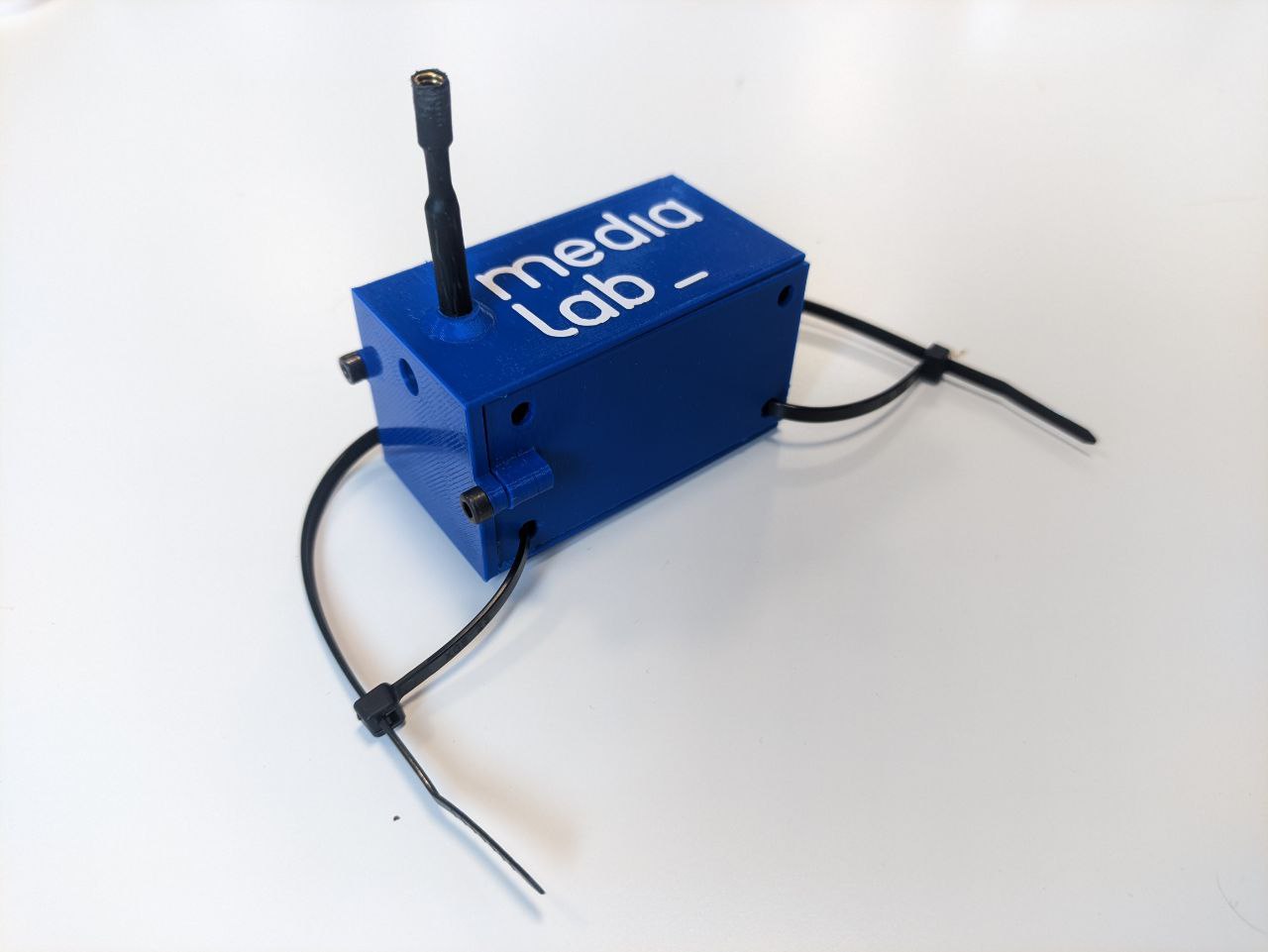
In this repository, you will find all the educational archives and guides necessary to understand with totality and even take the creative freedom to improve this project. Folders and files have been called with names that explain themselves to make more intuitive navigation.
Main characteristics ↩️
Developed using the Heltecell Cubecell HTCC-AB01 (a very low consumption plate with LORA implemented and supports recharge with solar panel and battery management)
Changes made to add, in addition, a CCS811 sensor (volatile particle sensor)
Custom housing to encapsulate all components to a size similar to the drone battery (container + container)
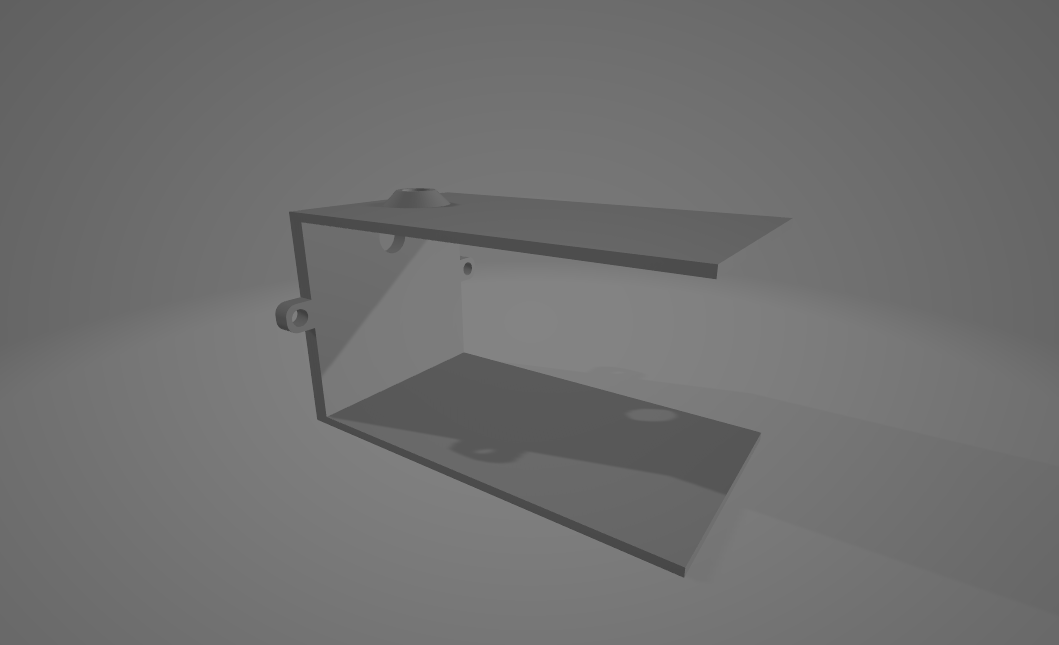
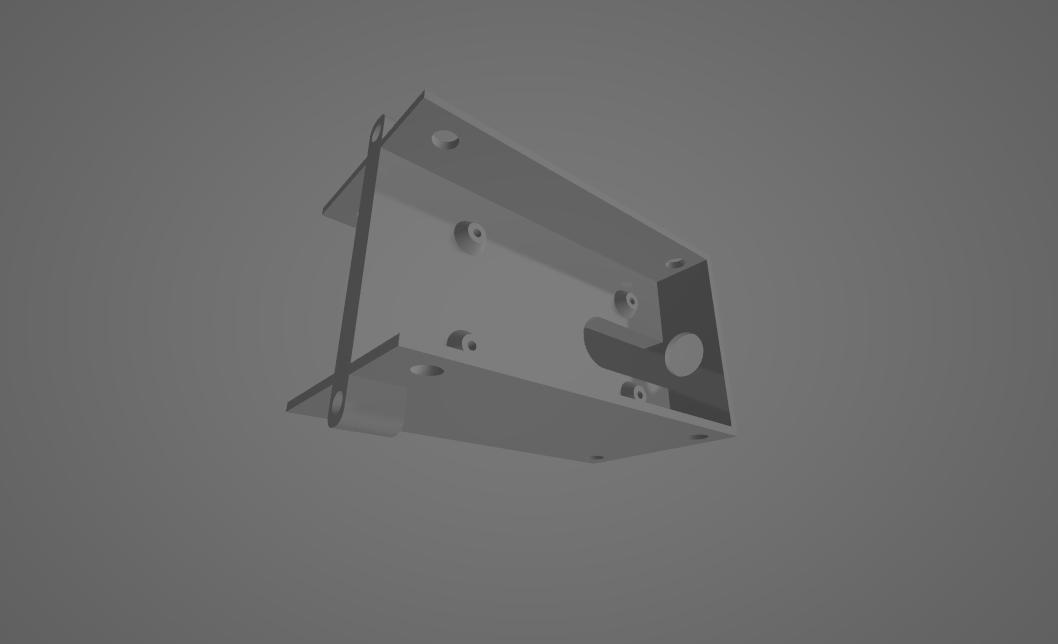
Assembly example:
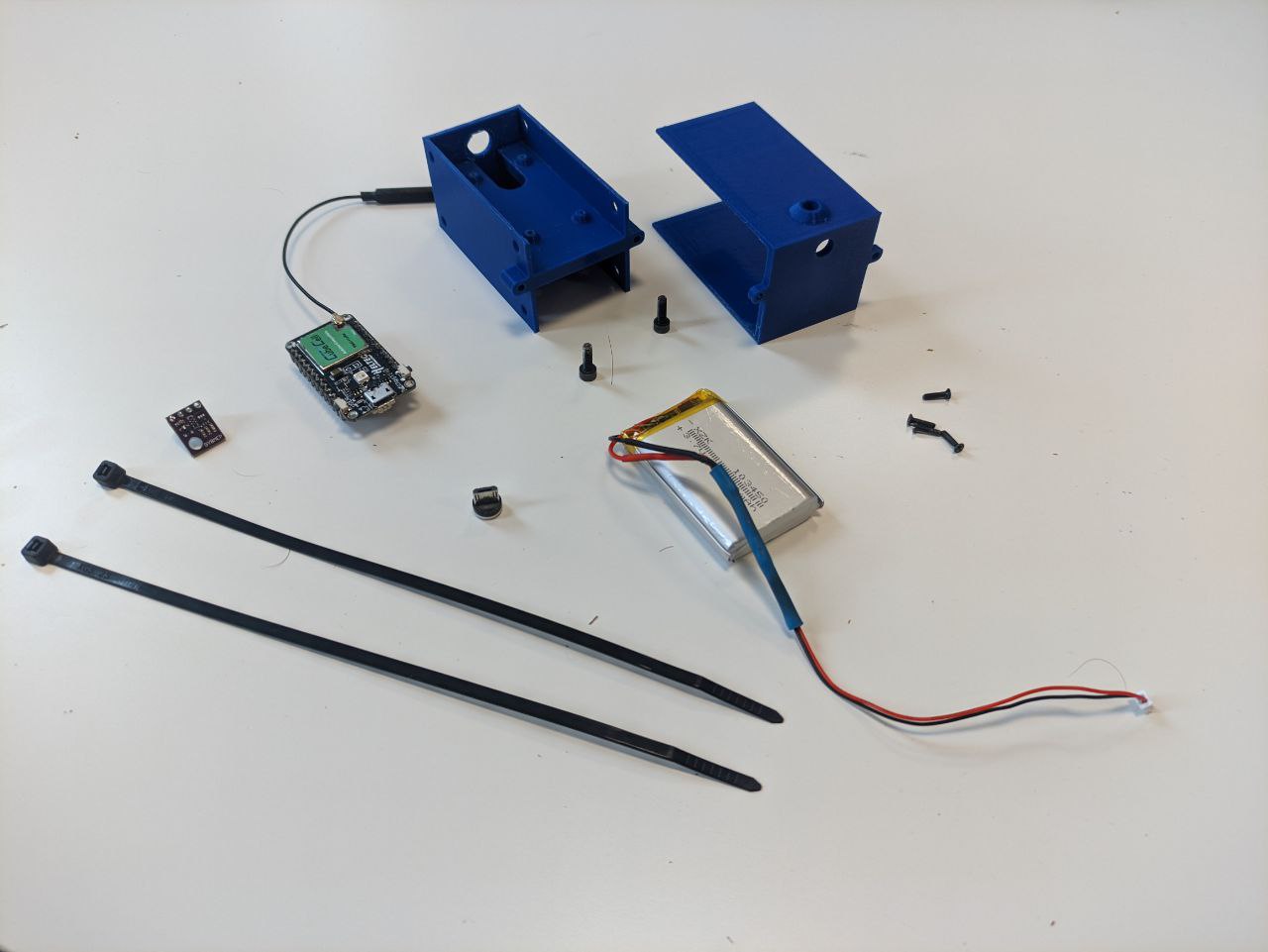
Warning
Six M3 screws are needed to fix the assembly and two flanges to adjust it to the drone frame
Component list ↩️
| Component | Model |
|---|---|
| Plate | CUBECELL HTCC-AB01 |
| Atmospheric sensor | BME280 |
| Volatile particle sensor | CCS811 |
| Battery | Lipo 1s 300mah |
| Housing | Custom (Inluid File) |
Connections list ↩️
| BME280 | CCS811 | Lipo | COBECELL |
|---|---|---|---|
SDA | SDA | - | SDA |
SCL | SCL | - | SCL |
VIN | - | - | VEXT |
GND | GND | - | GND |
| - | VCC | - | VDD |
| - | WAK | - | GPIO0 |
| - | - | Con Bat | Con Bat |
In a protoboard you see the following form:
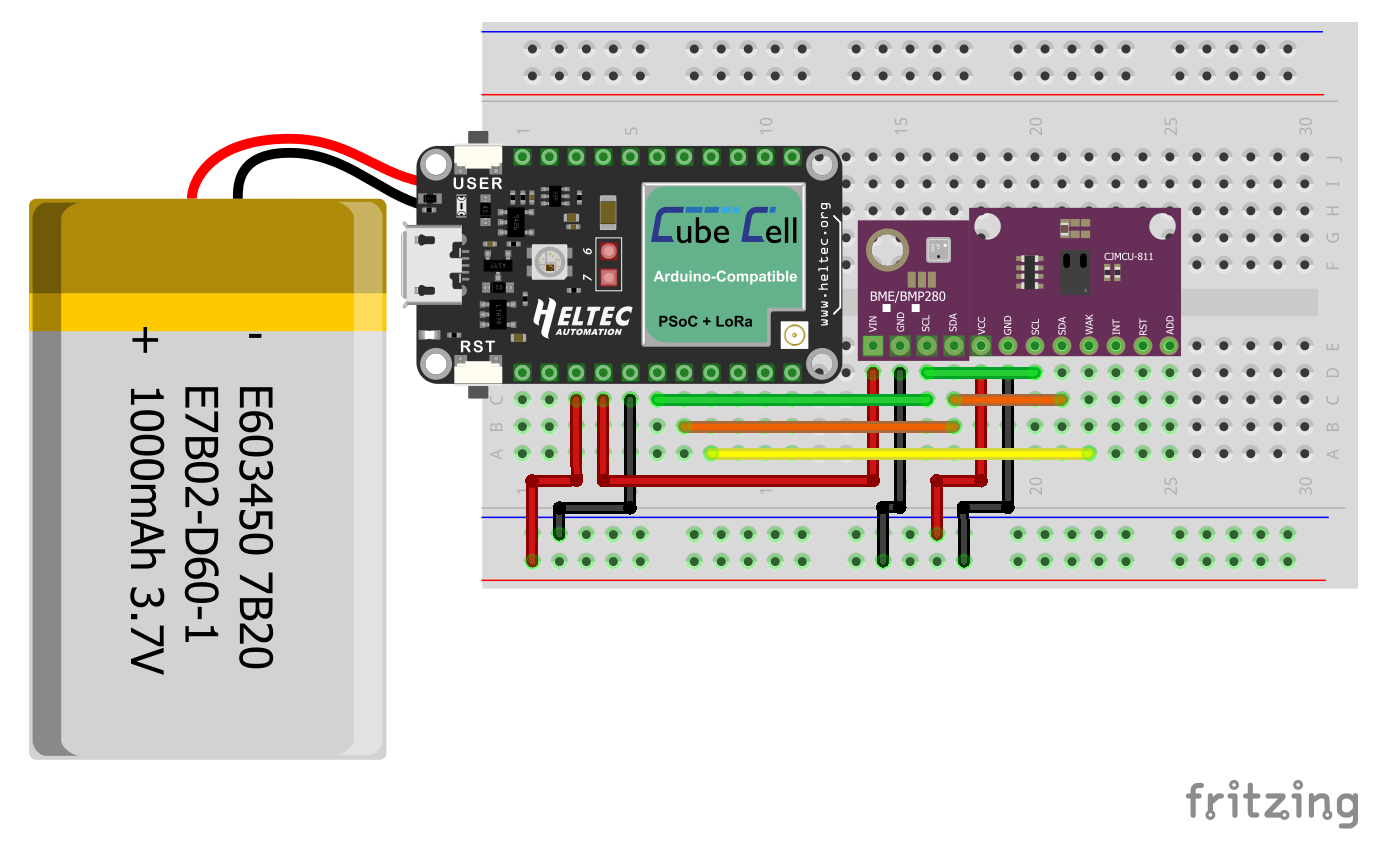
Note
Taking into account that the program makes use of the Deep Sleep of the Cubecell, the BME280 sensor is put in Sleep between messages thanks to the VEXT pin can be governed ( high/low ), while CCS811, for its use of chemical agents to obtain the measures, connects to the static VDD pin (even in Deep Sleep it provides current), and it is the pin GPIO0 , connected to the pin WAK of the sensor, the one that emits a digital signal ( high/low ) that throws it to Sleep
FLOWER (simplified!) ↩️
 Graph Td;
  To [light] -> | 1 | B (connect to a lorawan network)
  B -> | 2 | C (obtain battery measures and BME and CCs sensors)
  C -> | 3 | D (send the bytes to TTN)
  D -> | 4 | E (Timeline the data transmission rate)
  E -> | 5 | F (Go to Deep Sleep)
  F -> | 6 | B
In this section, a brief description is given to how the code is distributed between the files in medialablpwan/droneloraminiairqualitystation/main/src/ , where the code is available to flash or edit:
main.cpp /*
Algoritmo completo
*/credentials.h /*
Claves OTAA para sincronizarse en TTN
*/One more in -depth analysis is given in the code itself since each function is explained with comments.
In this section, the official Heltec code examples used to adapt the original project to its objectives and if they have finally been useful:
Lorawan Hello, world!
Lorawan CCS811
Lorawan Multisensors
Lorawan BMP280
CCS811 Test (CCS811.H)
CCS Example (adefruit_ccs811.h)
BME280 Example
Implementation experiment ↩️
The final assembly has been as follows:
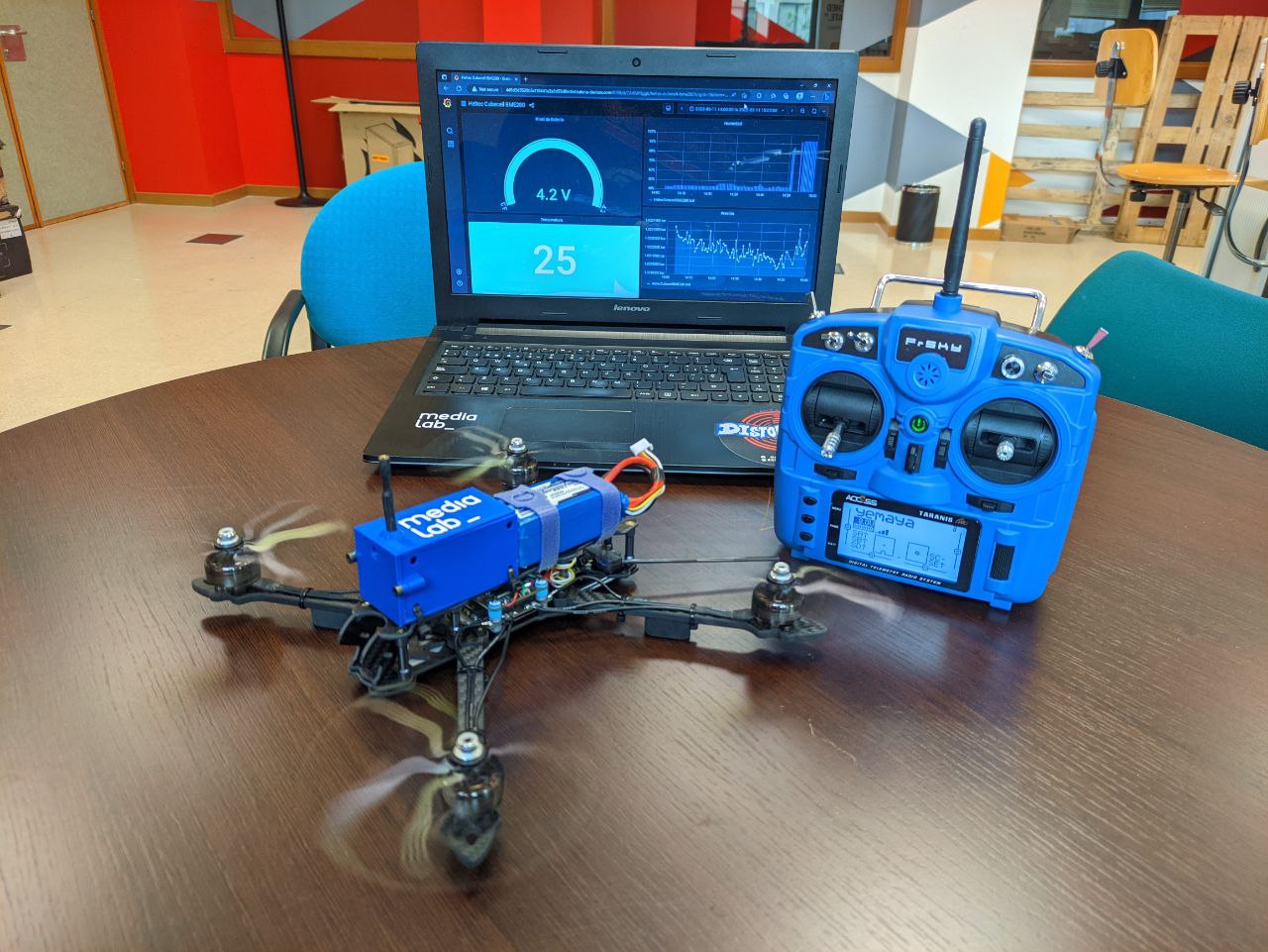
http://4f566df1FED52C6E7FD5F661F64AE3EB.balna-devices.com:8080/d/1BWGNFZGK/HELTEC-CUBECELL-BME280-CCS811?orgid=1&FROM=NOW-30M&TO=NOW&REW&ROSW
License ↩️
This project is licensed under the GPL-3.0 License. Contains Alexcorvis84/mini-weatherstation code
Contact ↩️
IMPORTANT
We will respond kindly to doubts and read suggestions:
More information about our activities:
Authors: Daniel Rodríguez Moya, Iván Graña and the Medialab_ Lpwan Working Group
Instructions on how to display grapha panels in the following medialablpwan/documentacion repo. ↩







