IOT_Cooper
1.0.0

|
SENSOR COOPER V3.2 - MEDIALAB_ LPWAN: LORA ULTRASONIC SENSOR TO MEASURE SAN MIGUEL'S CREEK WATER LEVEL
Powered by
In honour of Martin Cooper, Princesa de Asturias Award 2009, and Arlene Harris and their vision of IoP, The Internet of People, in MediaLab_ LPWAN we wanted to develop an IoT device that could improve the quality of the Polytechnic School of Engineering of Gijón. As a result, the idea of the Cooper Sensor came in as a LoRa device, synchronizable with The Things Network, that could be left measuring the water level of San Miguel's creek without any need of mantainance.
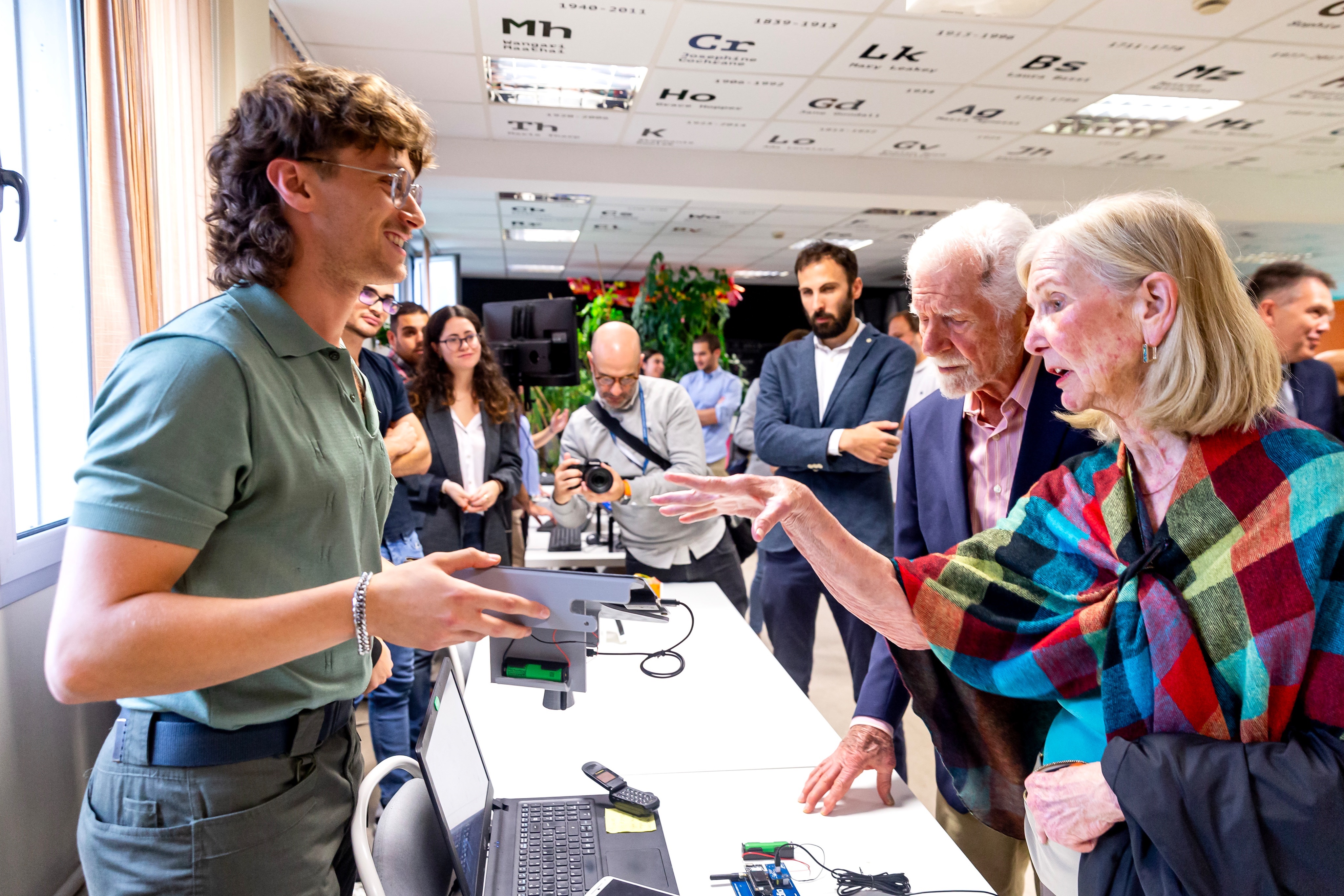
With these sensors, the aim is to monitor the possibility of a flood in the main building during the heavy rains season. Specifically, in 2018, a major flood took place turning useless many expensive equipment from the lower floors that were used by the students during the laboratory practices of many subjetcs:
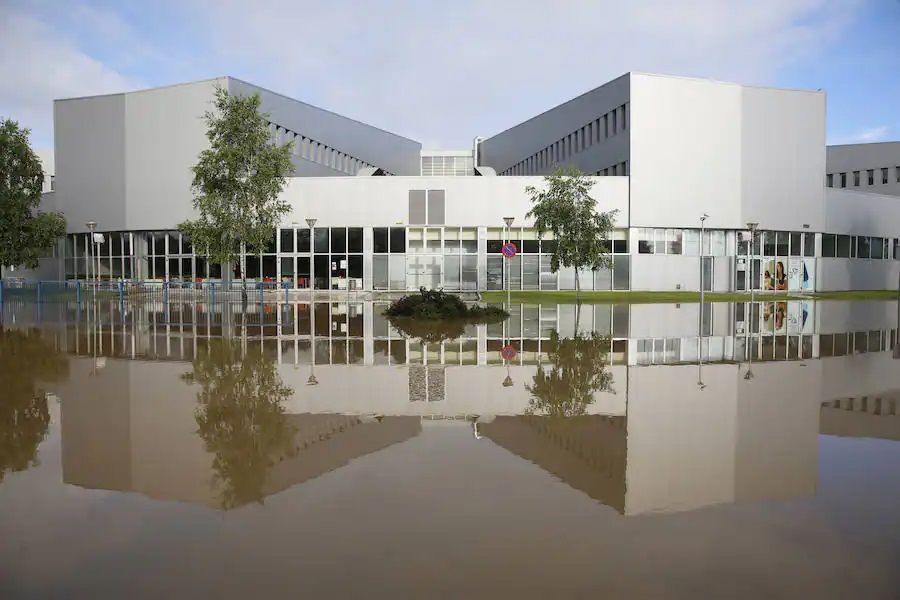
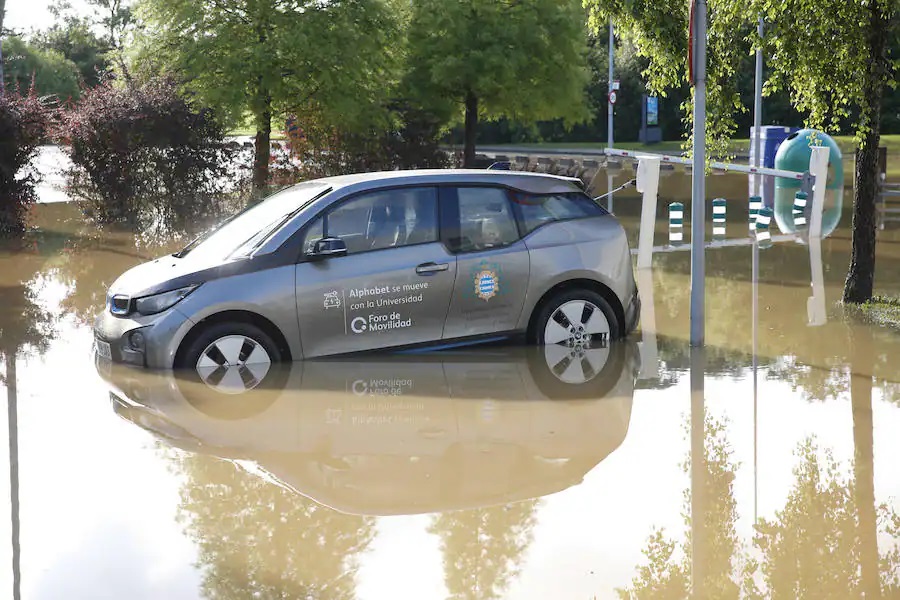
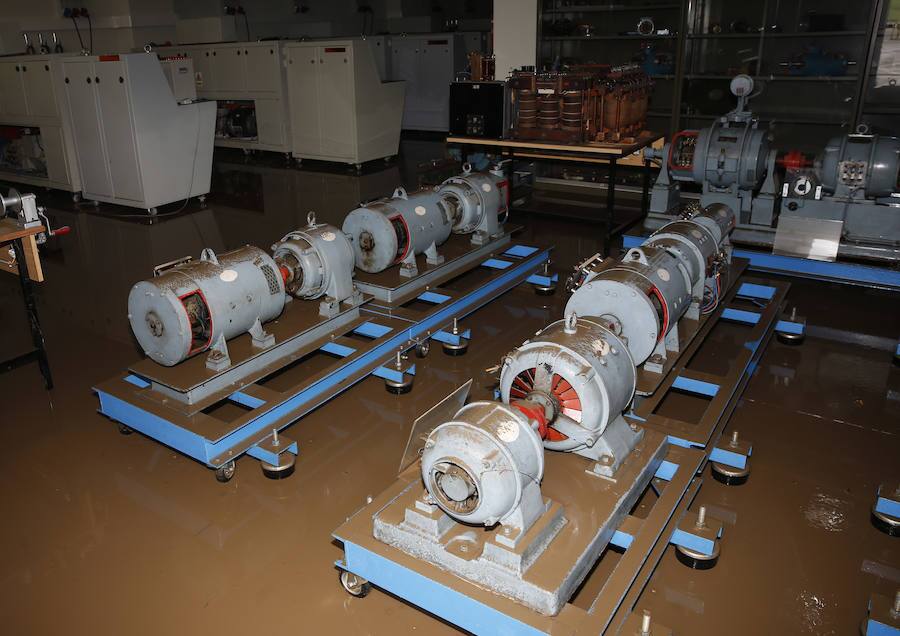
In this repo, you will find all the files and teaching guides required to fully understand and even take the creative freedom to improve this project. Folders and files have been given a self-explanatory name to make navigation more intuituve.
Main features ↩️
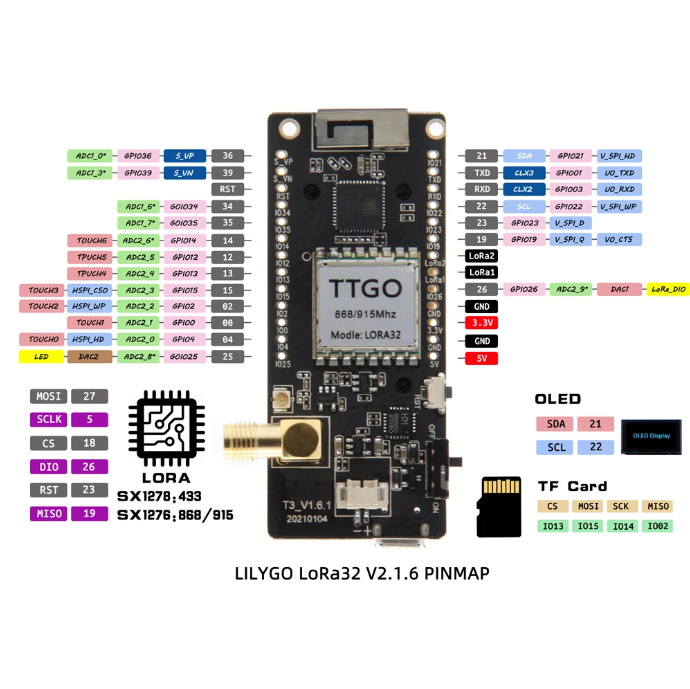
Developed using LilyGO LoRa32 OLED v2.1_1.6 (ESP32 based board with built-in LoRa capabilities that supports solar recharging and battery management)
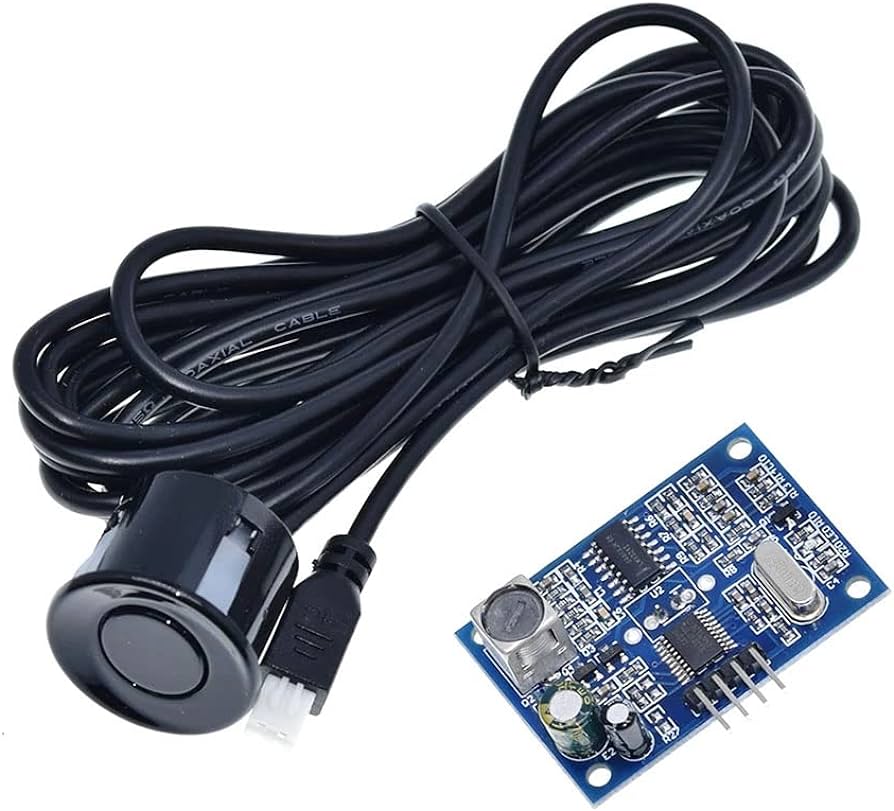
Changes made for JSN-SR04T (Ultrasonic distance sensor)
Warning
This sensor is extremely sensitive to physical disturbances. Be sure to perfectly align it perpendicularly to the surface where the ultrasonic beam bounces and also mind having direct vision to it
Dynamic Data Transmission Rate implementation: send interval dynamically changes its value between 20 and 40 minutes depending on the typical deviation from the latest 5 distances sent to The Things Network (By OTAA; file payload_formatter.json is a suggestion on how to decode the sent bytes)
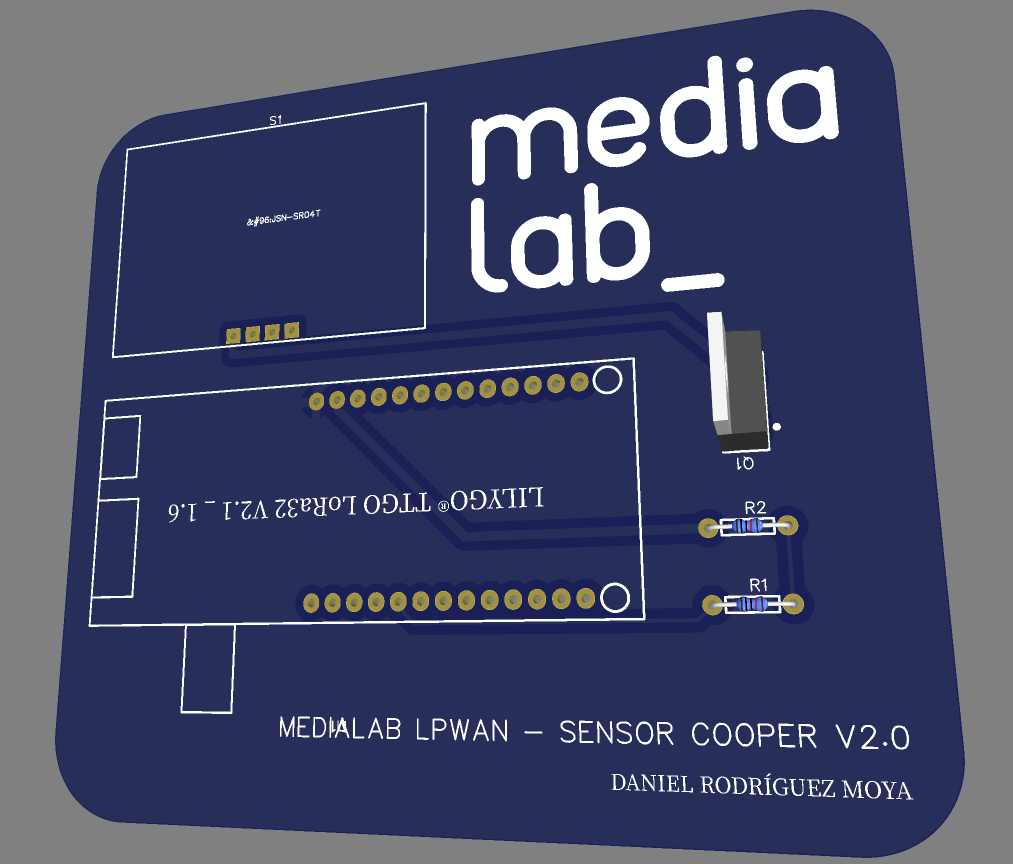
Custom PCB
Tip
Consider soldering female pin connectors so the electronic components can simply be plugged in and unplugged if a repair has to be done
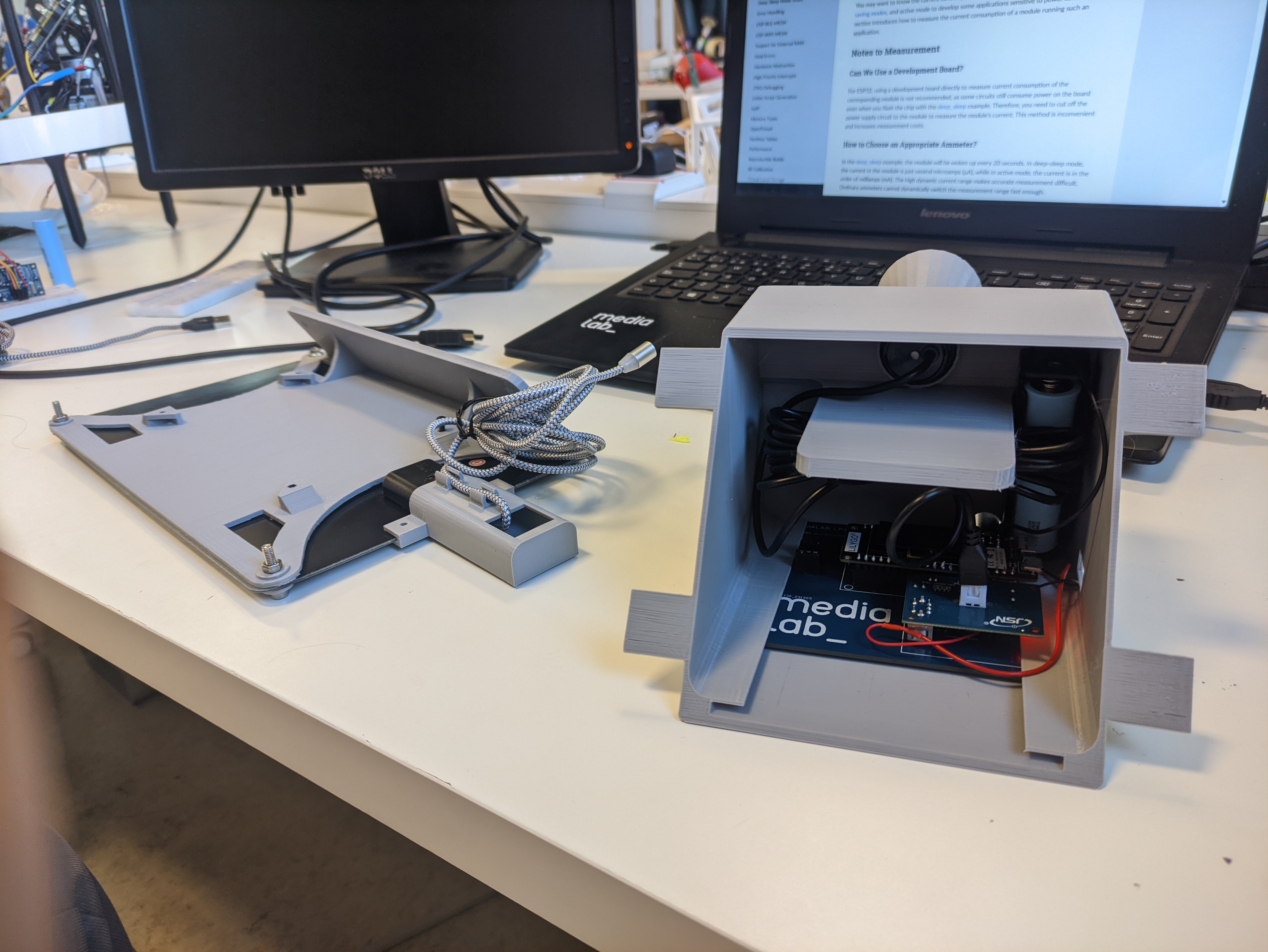
Custom housing to fit all the elements in the most efficient way (Container + Solar panel holder + USB protector)

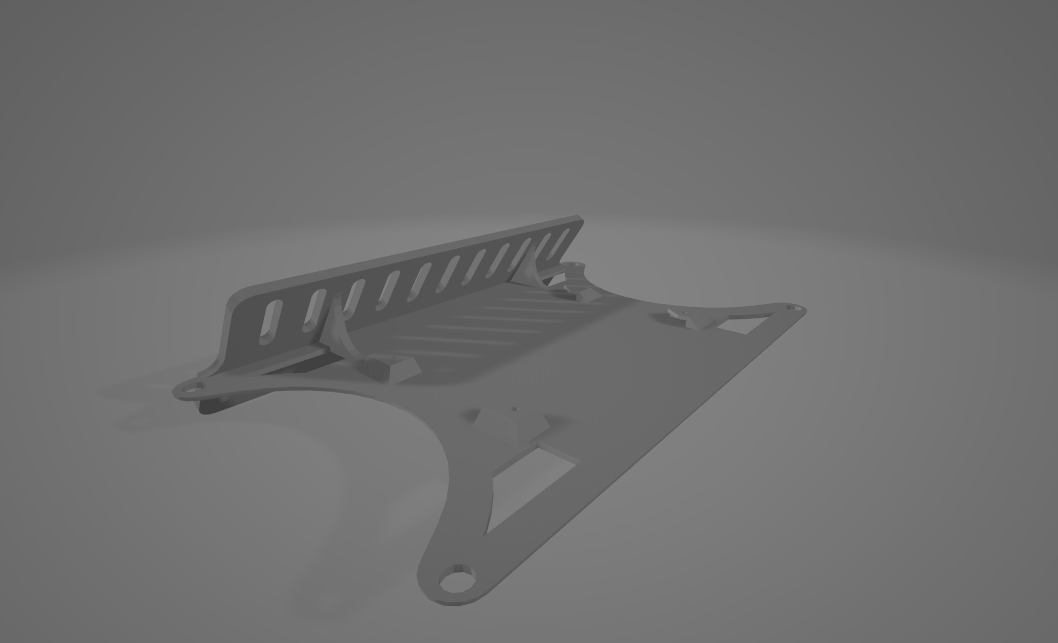

Assembly example:
Warning
Clear colour PETG 3D printing filament is recommended to survive sun radiation and plastic deformations. An O-ring is also a good choice to fix and stabilize the sensor inside of the bell. Four M3 screws are needed to fix the assembly
The following list enumarates all the tasks involved in the researching process of this project and if they have been strictly completed:
- Some pins are conflictive due to poor manufacturer documentation, so testing is still being
- carried out
Full understanding of the sensor working mode and alternative modes
Sensor code implementation
LoRa code implementation
Low power code implementation
Low power hardware components
- A transistor is being tried to be implemented so the sensor can be powered-on from the
- board's 5V pin and powered-off when going to deep slee, but it is getting tricky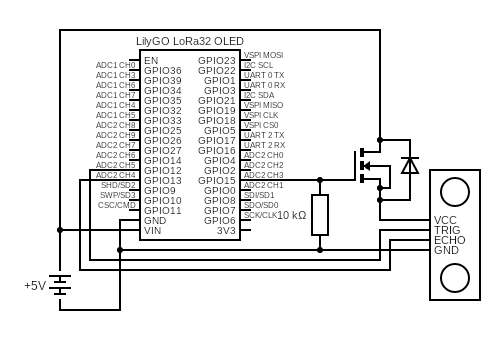
Electric schematic with the transistor
- As low power hardware has not been fully implemented, PCB has to waitCasing 3D modeling
Data visualization app
Component list ↩️
| Component | Model |
|---|---|
| Dev Module | LilyGO LoRa32 OLED v2.1_1.6 |
| Distance sensor | JSN-SR04T |
| N-Channel MOSFET | IRF540N |
| Resistor | 2k2 |
| Battery | 18650 |
| Solar panel | SYP-S0606 |
| PCB | Custom (file included) |
| Housing | Custom (file included) |
Connection list ↩️
| JSN-SR04T | Transistor | Resistor | 18650 Shield | SYP-S0606 | LilyGO |
|---|---|---|---|---|---|
trigger |
- | - | - | - | 13 |
echo |
- | - | - | - | 12 |
5v |
S |
- | - | - | - |
GND |
- | indifferent |
- | - | GND |
| - | G |
indifferent |
- | - | 15 |
| - | D |
- | - | - | 5V |
| - | - | - | USB-In |
USB-Out |
- |
| - | - | - | USB-Out |
- | USB-In |
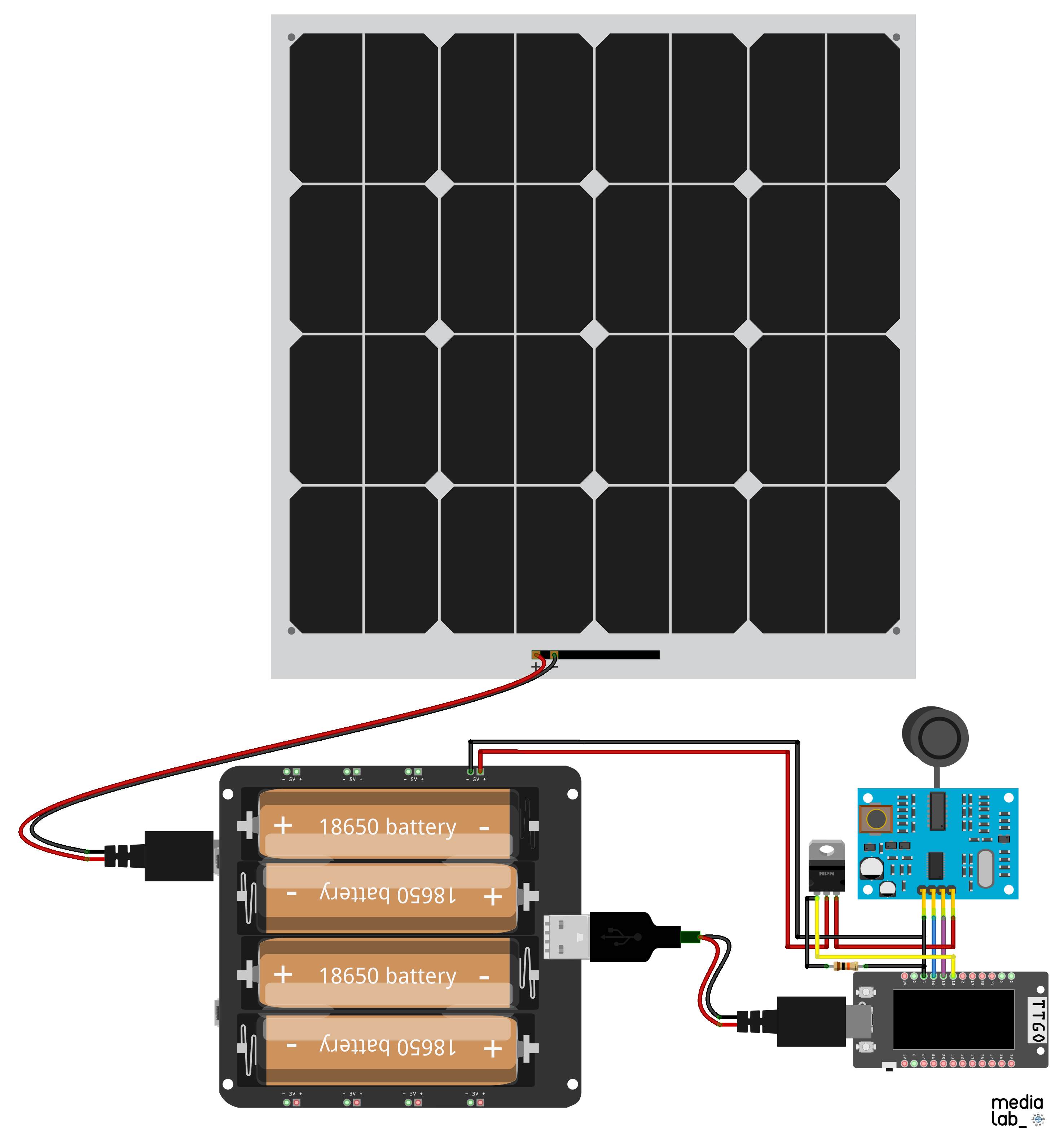
Sketched it looks the following way:
Caution
Board model used in the sketch above is a TTGO T3 v1.3, but pin numbers correspond to those on the v2.1_1.6
Flowchart (Simplified!) ↩️
graph TD;
  A[Turn on] -->|1| B(Wake up if in deep sleep)
  B -->|2| C(Get distance and battery measurement)
  C -->|3| D(Send bytes to TTN)
  D -->|4| E(Time data transmission rate)
  E -->|5| F(Go to deep sleep)
  F -->|6| B
In this section, a brief description on how the code is distributed among files in medialablpwan/lorawaterlevelmonitoring/main/, where the code is available and ready to flash or edit, is given:
main.ino
/*
Definition of global functions
Variables to be stored in the RTC memory
'setup()' and 'loop()' functions
*/
sensor.ino
/*
Functions and variables needed to make a sensor work
*/
ddc.ino
/*
Functions and variables for the implementation of the dynamic data transfer rate
*/
sleep.ino
/*
Functions to activate ESP32's deep sleep mode
*/
ttn.ino
/*
Functions from LMIC library
*/
configuration.h
/*
Sensor macros and boolean toggles
*/
credentials.h
/*
OTAA keys for TTN synchronization
*/
lmic_project_config.h
/*
LoRa frequency band and radio chip selector
*/
A more in depth analysis is given in the code itself as comments explain what each function does.
Tip
The most important files to edit are sensor.ino, where any sensor can be implemented, and configuration.h, where the peripherals' macros are declared
Caution
Additional code may be needed if implementing I2C I/O. The functions to make them work are in the original project in TTGO-PAXCOUNTER-LoRa32-V2.1-TTN/main/main.ino
LilyGO board library (Paste the link on the Preferences tab and choose TTGO LoRa32 OLED as Board in Arduino IDE): https://github.com/Xinyuan-LilyGO/LilyGo-LoRa-Series/blob/master/boards/t3_s3_v1_x.json
LMIC (Copy the contents of the project file main/lmic_project_config.h to the library file arduino-lmic/project_config/lmic_project_config.h and uncomment the proper frequency for your region. The sketch does always look at the library folder for the configured region!): https://github.com/mcci-catena/arduino-lmic
QuickMedianLib (To obtain more solid distance values): https://github.com/luisllamasbinaburo/Arduino-QuickMedian
ESP sleep (To reduce battery consumption): https://github.com/pycom/pycom-esp-idf/blob/master/components/esp32/include/esp_sleep.h
Note
Other libraries, like SPI library, are easily downloadable from Arduino IDE
Deployment experiment ↩️
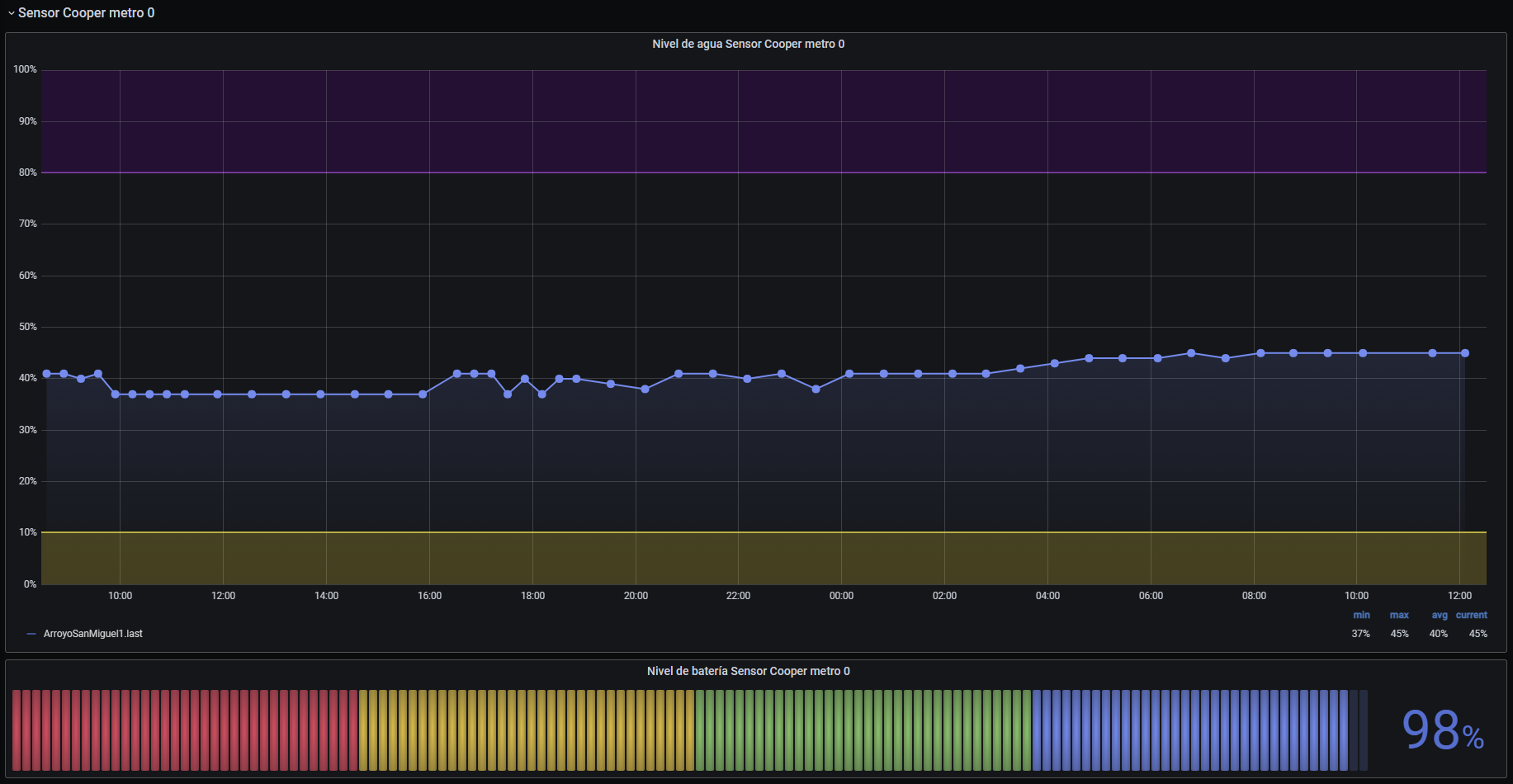
The first unit has been deployed near the Polytechnic School of Engineering of Gijón:
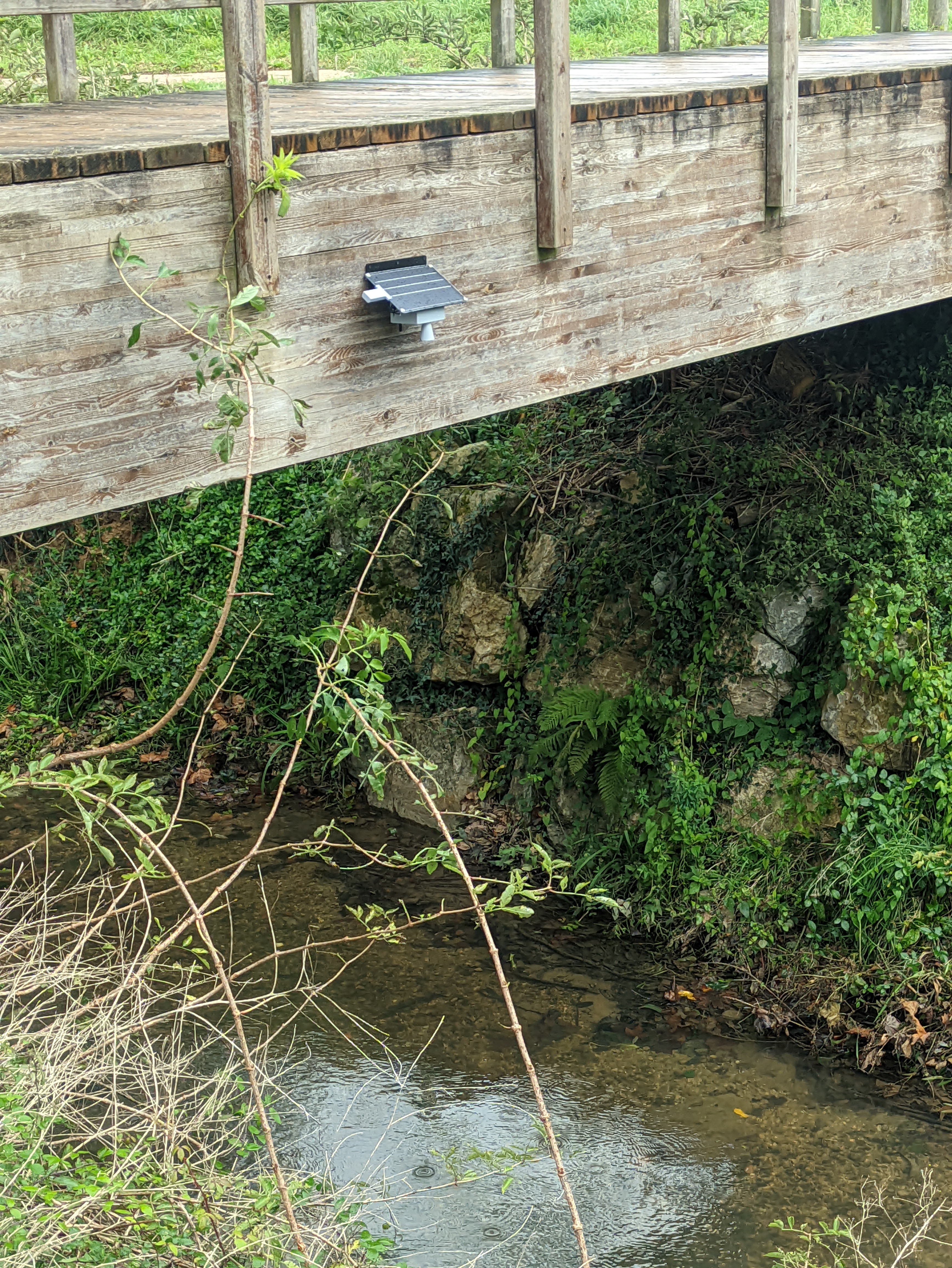
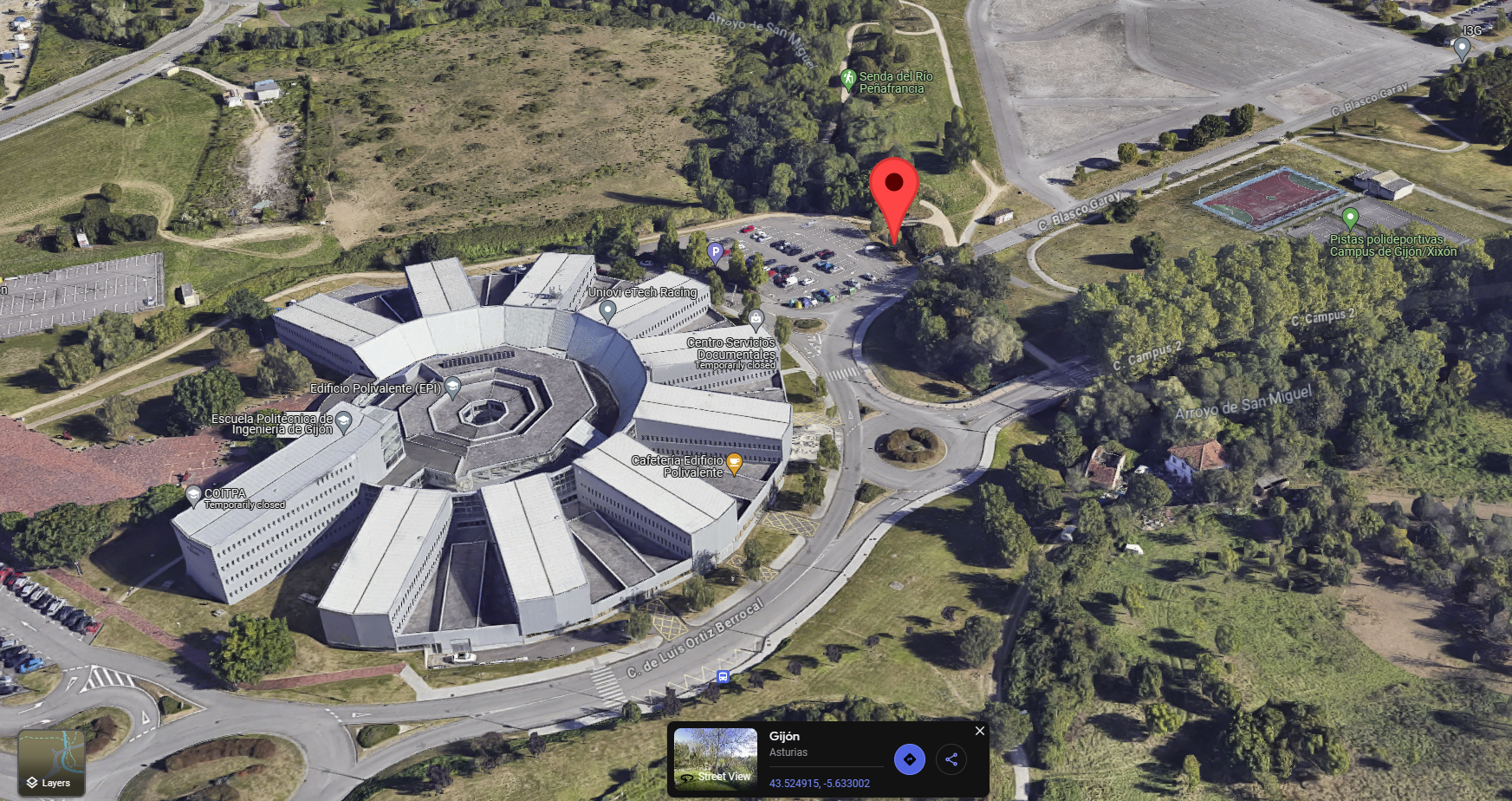
http://4f566df1fed52c6e7fd5f661f64ae3eb.balena-devices.com:8080/d/vJhQNCZgz/sensores-jsn-sr04t-arroyo-de-san-miguel?from=now-24h&orgId=1&to=now&refresh=1m
License ↩️
This project is licensed under the GPL-3.0 license. Contains code from rwanrooy/TTGO-PAXCOUNTER-LoRa32-V2.1-TTN
Contact ↩️
Important
We will kindly answer doubts and read suggestions:
More info about our activities:
Authors: Daniel Rodríguez Moya, Óscar Gijón, Ramón Rubio and MediaLab_ LPWAN Workgroup
Instructions on how to deploy Grafana panels are given on the repo medialablpwan/documentacion. ↩







