AWS Machine Learning
1.0.0

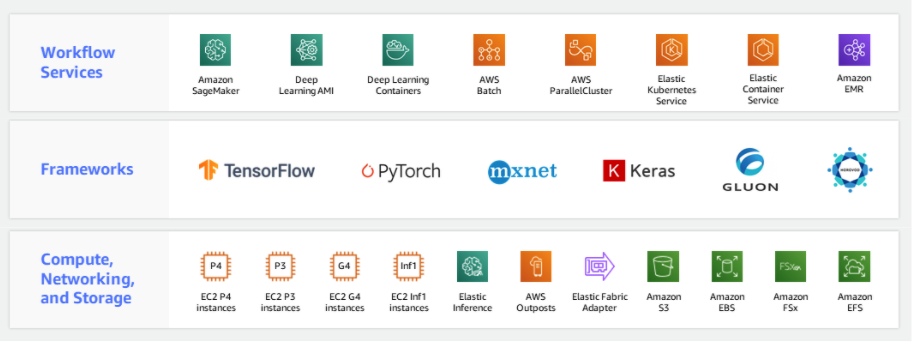
With AWS, you can build, train, and deploy your models fast. Amazon SageMaker is a fully managed service that removes complexity from ML workflows so every developer and data scientist can deploy machine learning for a wide range of use cases.
AWS Workflow services make it easier for you to manage and scale your underlying ML infrastructure.
AWS DeepLens allows you to create and deploy end-to-end computer vision–based applications.
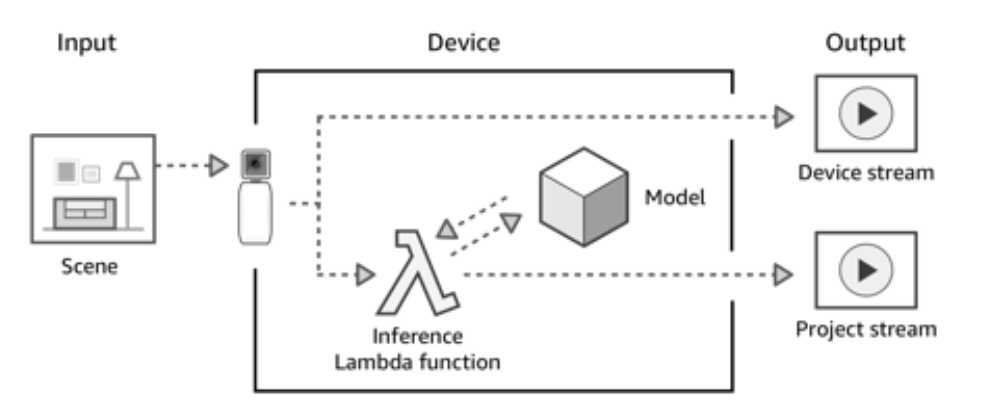
AWS DeepLens is integrated with multiple AWS services. You use these services to create, train, and launch your AWS DeepLens project. You can think of an AWS DeepLens project as being divided into two different streams as the image shown.
Basic reinforcement learning terms in the context of AWS DeepRacer.
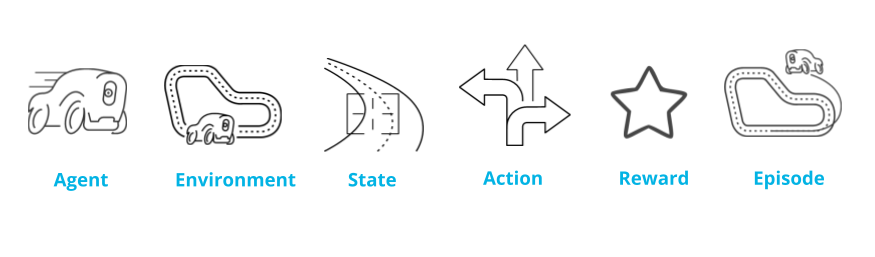
In a reinforcement learning model, an agent learns in an interactive real-time environment by trial and error using feedback from its own actions. Feedback is given in the form of rewards.
AWS DeepComposer gives you a creative and easy way to get started with machine learning (ML), specifically generative AI. It consists of a USB keyboard that connects to your computer to input melody and the AWS DeepComposer console, which includes AWS DeepComposer Music studio to generate music, learning capsules to dive deep into generative AI models, and AWS DeepComposer Chartbusters challenges to showcase your ML skills.
To generate, create, and edit compositions with AWS DeepComposer, you use the AWS DeepComposer Music studio. To get started, you need an input track and a trained model.
For the input track, you can use a sample track, record a custom track, or import a track.
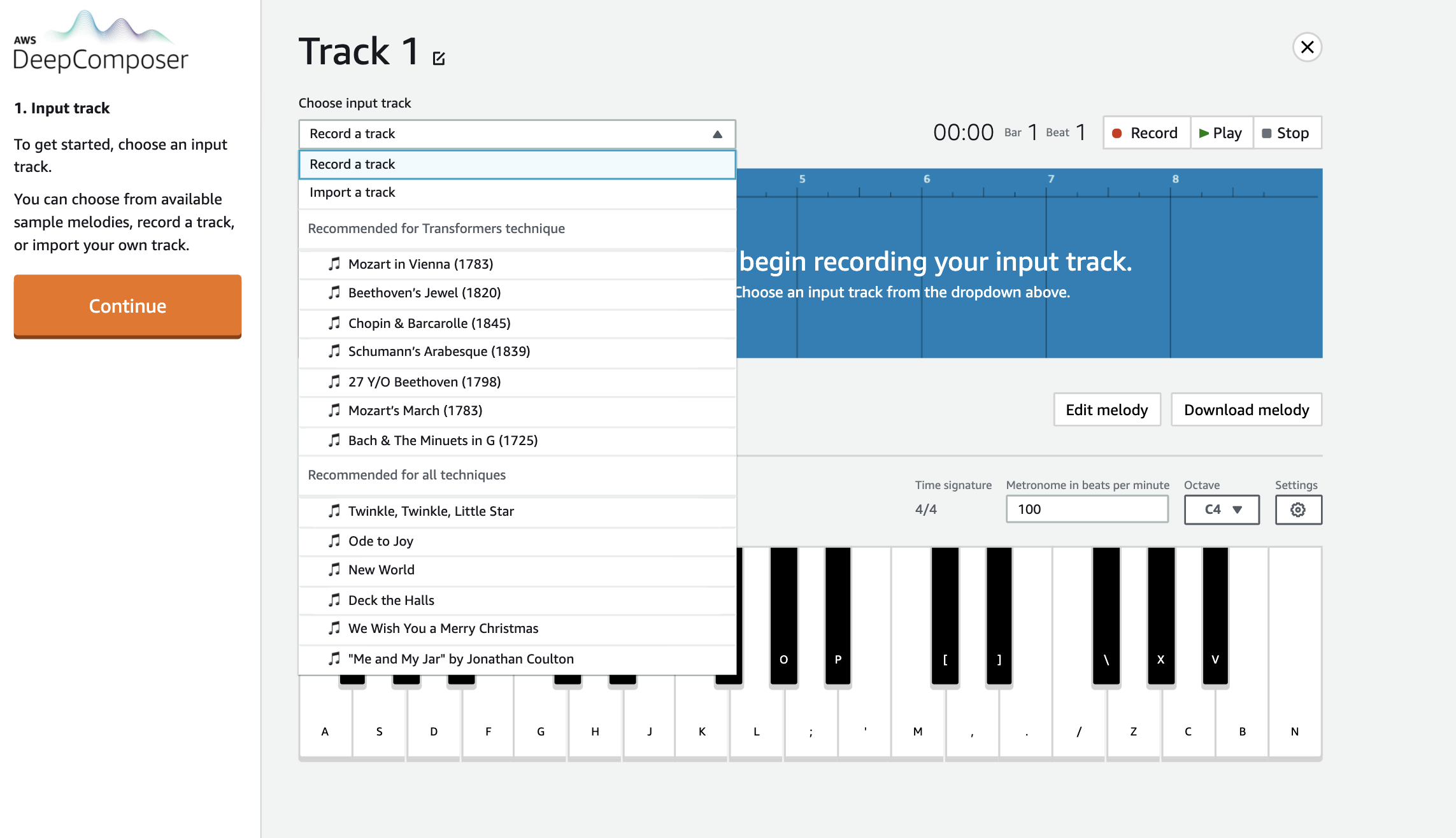
Each AWS DeepComposer Music studio experience supports three different generative AI techniques: generative adversarial networks (GANs), autoregressive convolutional neural network (AR-CNNs), and transformers.
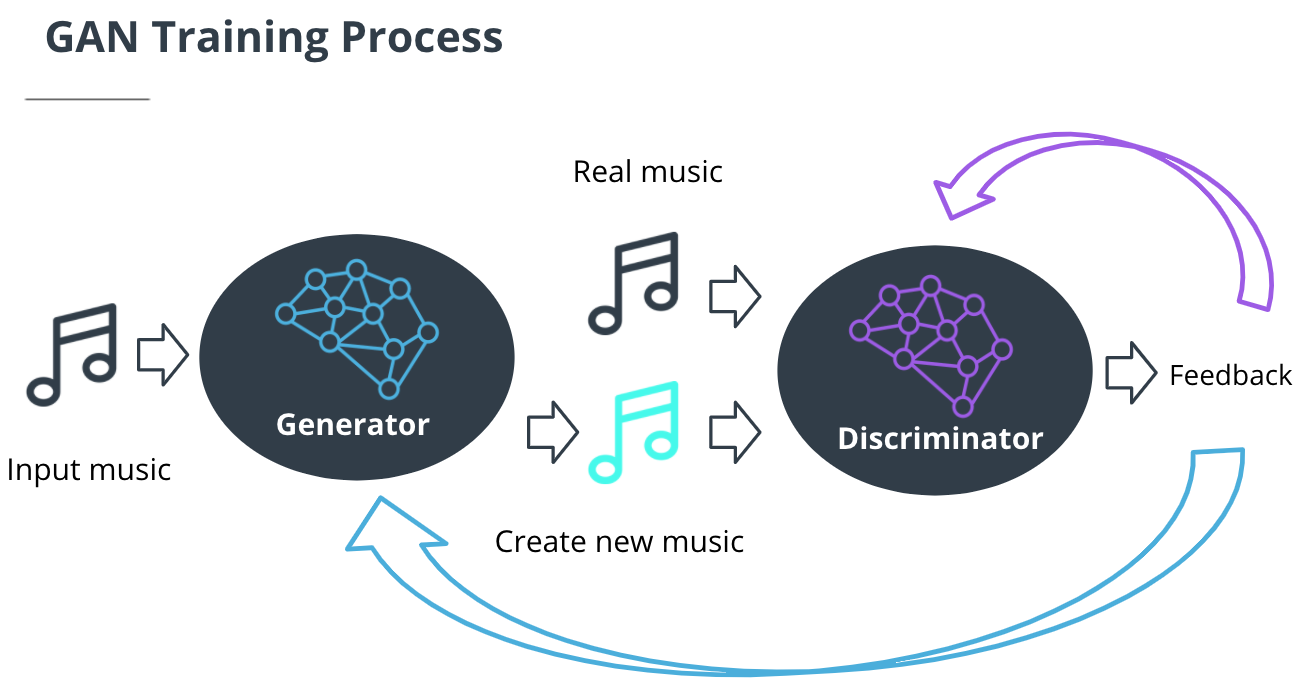
A GAN is a type of generative machine learning model which pits two neural networks against each other to generate new content: a generator and a discriminator.
The generator and the discriminator are trained in alternating cycles. The generator learns to produce more and more realistic data while the discriminator iteratively gets better at learning to differentiate real data from the newly created data.
During training, the generator and discriminator work in a tight loop as depicted in the following image.
To train the AR-CNN model to predict when notes need to be added or removed from your input track (edit event), the model iteratively updates the input track to sounds more like the training dataset. During training, the model is also challenged to detect differences between an original piano roll and a newly modified piano roll.







