flexatar virtual webcam
1.0.0

Flexatar Virtual Webcam is the technology that
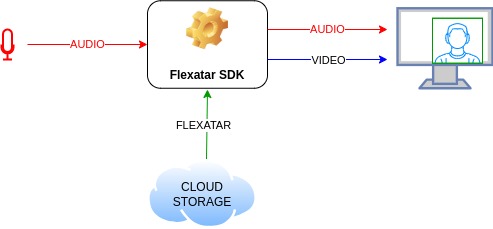
Our technology is intentionally designed for WebRTC!
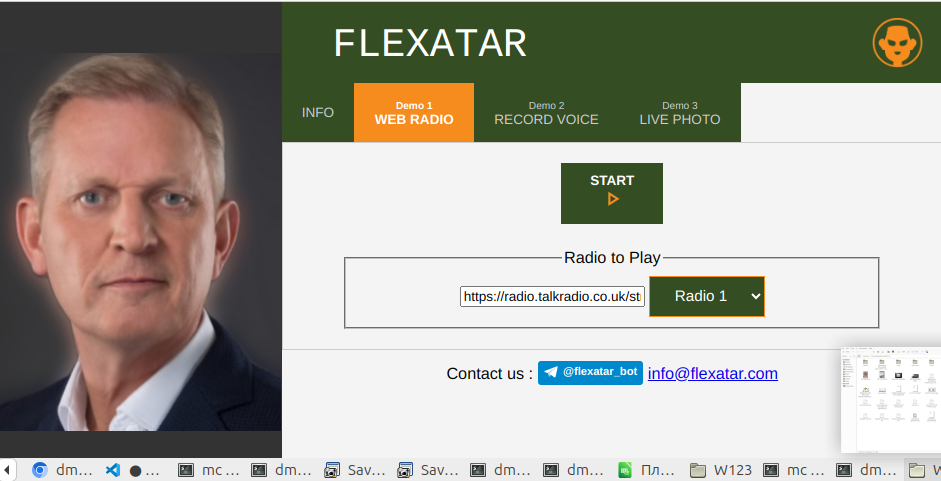
To start with, PLEASE TAKE A LOOK at our demo of animating flexatar with web radio in your browser.
You can find the preliminary examples here
The key advantage of flexatar technique is that it can be used to animate user's audio track from microphone, thus acting as a virtual webcam for WebRTC.
We are planning to commit integration examples to leading WebRTC SFU's like Janus, Livekit etc. Feel free to offer candidates.
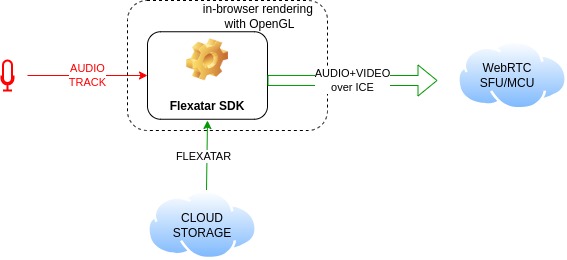
The procedure is as follows:
  navigator.mediaDevices
    .getUserMedia({audio: true,})
    .then((stream) => {
        flexatarSDK.audioInputByMediaStrem(stream)
    })
We are planning to share the example of interfacing pion soon
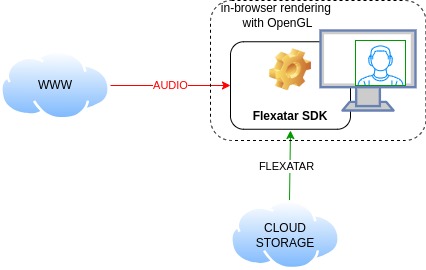
We are targeting obvious applications like virtual assistants, bots etc. The demo provides an idea how it works.
All you need is to
videoElement.srcObject = ftar.FlexatarSDK.mediaStreamFactory(
    "<token>",
    "<flexatar link from telegram bot>",
    mediaStream, // media stream with audio track
    (success) => {
        if (success){
            // Do your awesome stuff ...
        }else{
            console.log("Flexatar media stream is unavailable")
        }
    }
)
In the context of the mentioned scenario, we are working on integration with
Stay tuned!
Like in Magic movies: a photo starts moving. From the technical point of view: no need to fetch audio features and animate as above, animation pattern is enough.
We are providing FLexatarSDK as B2B to our partners.
By default, our services are provided as prepaid. After the money paid, we are sharing a Secret.
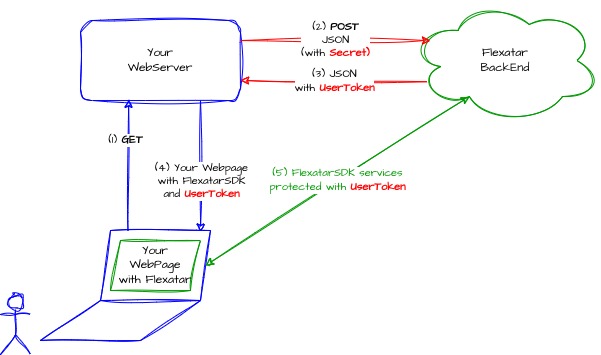
To enable our FLexatar SDK for your customers, you need to receive Token from our backend and provide it to your customer.
When a user requires a service from our partner (1), a partner needs to make POST request (2) to our backend, with Secret in Bearer header and json in request body. The json contains user data and tariff ("subscription") to be used.
The response (3) contains json with Token that is to be provided to the user, alongside with a webpage and Flexatar SDK (4).
When SDK needs to create or download Flexatar (5) for the user, the Token is involved.
Request Headers:
"Content-Type: application/json"
"Authorization: Bearer <Secret>"
POST Request JSON Fields:
"subscription": "<the tariff to be used>",
"authtype": "<the way how the end-user was authenticated, like gmail.com>",
"user": "<user id>",
"resubscribe": true   __optional, if the user is to be charged as a new one__
POST Response fields:
"token": "<token for the given end-user>",
"ExpiresAt": "when the token expires",
"is_expired": <bool>  __if the token expires, either time-based or resources consumed__
"exists": <bool> __if the token is charged now or have already been charged earlier__
We'll accept Stripe payments soon. We are open to discuss other alternatives.
1.What flexatar stands for?
2.Can I make a flexatar by my own?
3.Is it 3D?
4.What's under the hood?
5.How much time does it take to create a flexatar?
6.Is the technology scalable?
7.Mobile SDK?
8.Any restrictions?







