PyTorch Tutorial 2nd
v1.0.0-PD

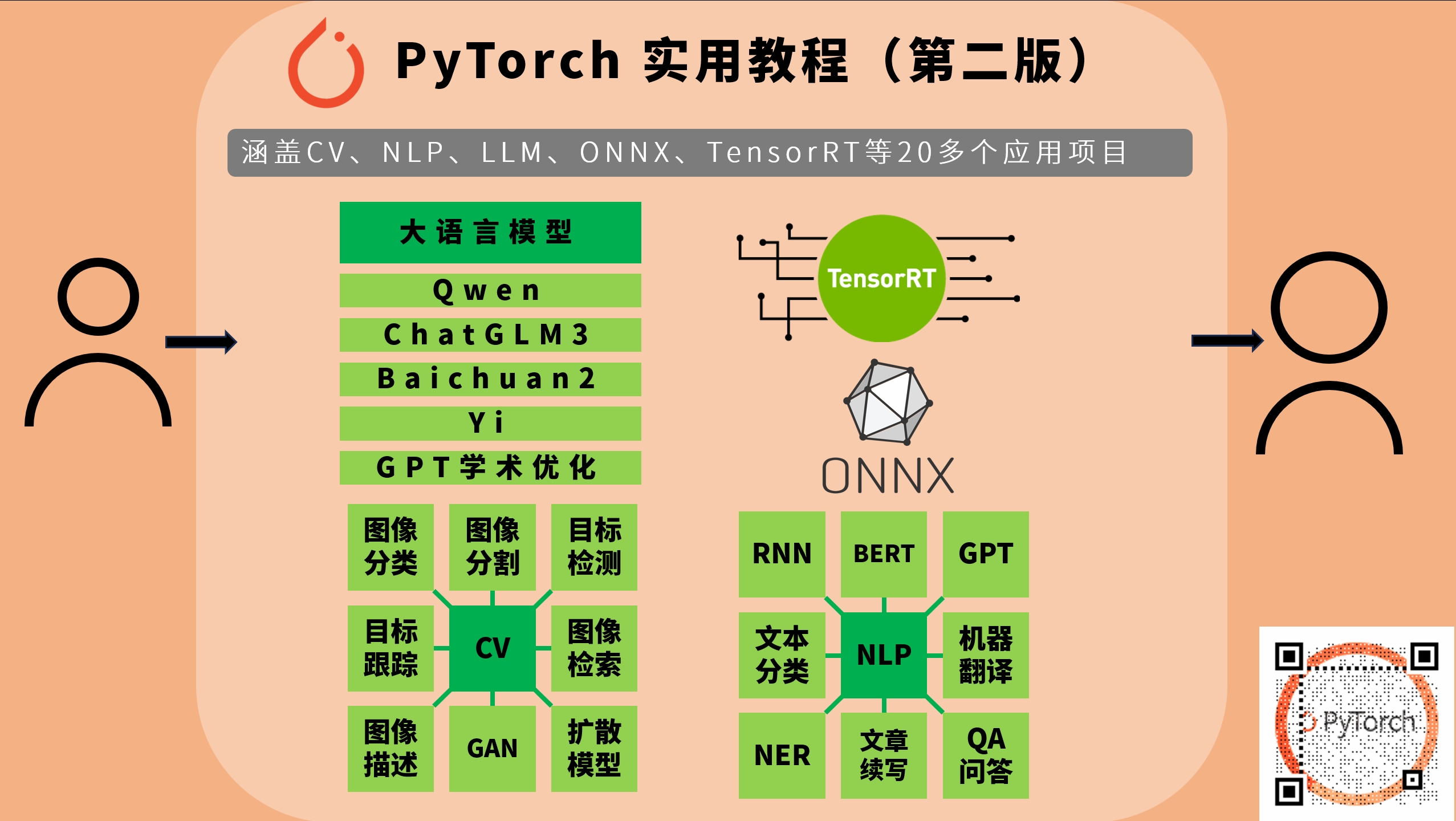
After 5 years, 4 years and 2 years, the "PyTorch Practical Tutorial" (Second Edition) has been completed. Above the essence of the first edition, rich and detailed deep learning application cases and reasoning deployment frameworks have been added, making this book more systematically cover the knowledge involved by deep learning engineers. For example, the development of artificial intelligence technology has been wave after wave, "Pytorch Practical Tutorial" (second edition) is not over, but set sail again, opening new technologies, new fields, and new chapters. I hope to continue to learn and progress with everyone in artificial intelligence technology in the future.
Read online ( open source for free ): "PyTorch Practical Tutorial" (Second Edition)
Supporting code ( open source free ): "PyTorch Practical Tutorial" (Second Edition)
???: Please click Star to encourage it!
This project has been included in the HelloGitHub community and has been added to the HelloGitHub badge program
This book takes basic concepts as the cornerstone, computer vision, natural language processing and large language models as the core, and inference deployment framework as the bridge, all of which provide readers with code engineering and theoretical explanations for project implementation. The book is divided into three parts, the first part: Introduction, the second part: Application, the next part: Implementation.
PyTorch basics. For beginners, non-professional and undergraduate students, we provide a introduction to PyTorch, explain the construction of the development environment, introduce the core modules of PyTorch such as data, models, optimization, and visualization. Finally, we use the explained PyTorch knowledge points to build a set of own code structure to lay the foundation for subsequent applications.
Industrial application. After the previous article, I sharpened a good knife and then used it to show my skills in various fields. Three topics will be explained, namely Computer Vision, Natural Language Processing and Large Language Model.
-
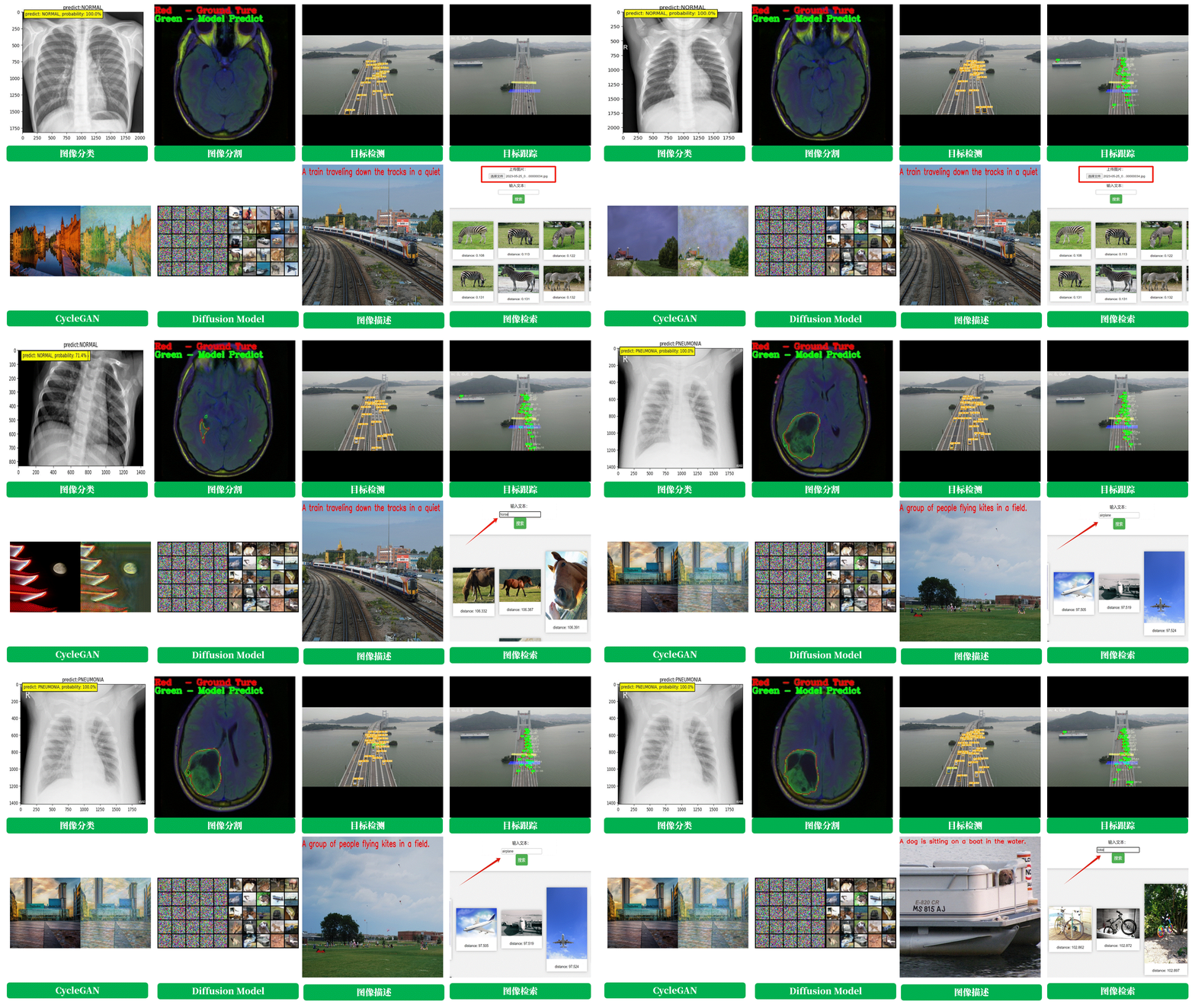
In the CV chapter, it includes mainstream tasks, including eight major tasks: image classification, image segmentation, object detection, object tracking, GAN generation, Diffusion generation, image description and image retrieval .
-
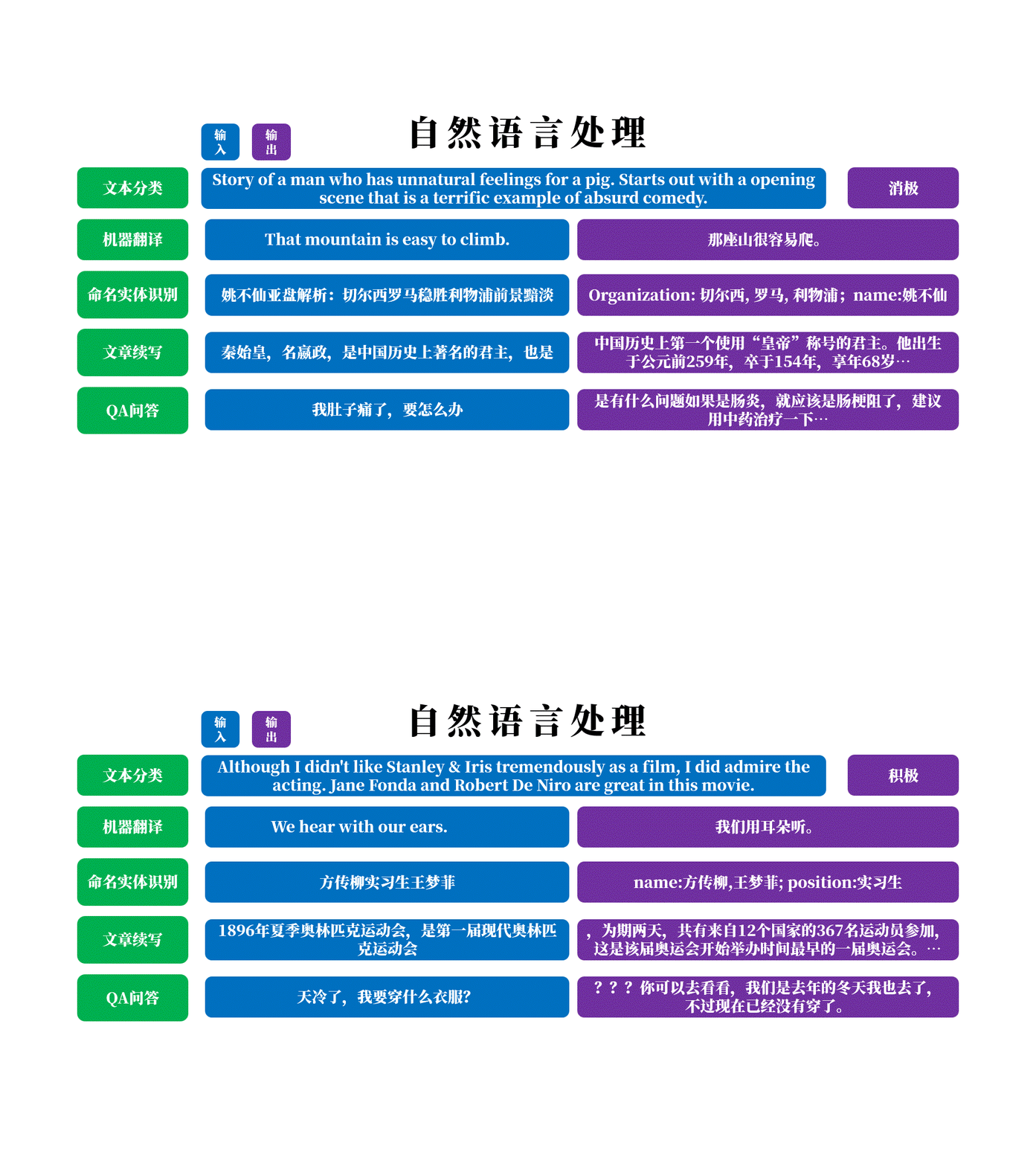
In the NLP chapter, it includes detailed explanation and application of RNN, LSTM, Transformer, BERT and GPT models. The application tasks include five major tasks: text classification, machine translation, naming body recognition, QA question and answer, and article generation .
-
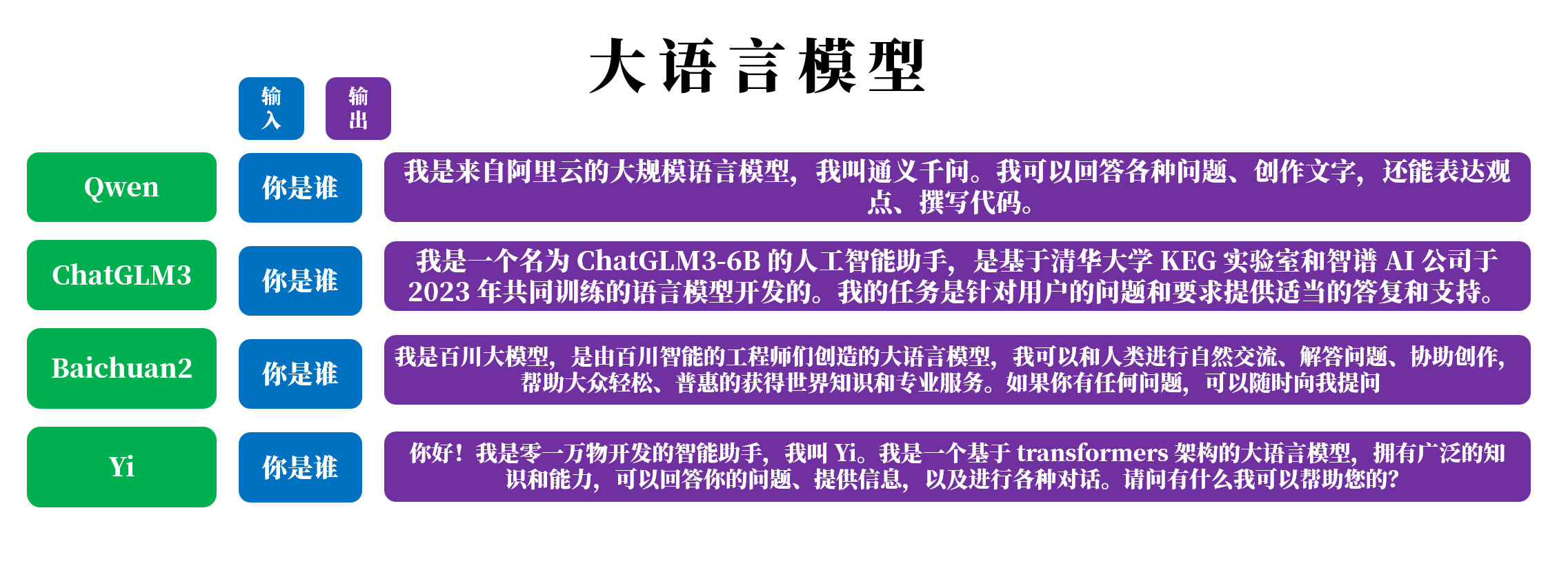
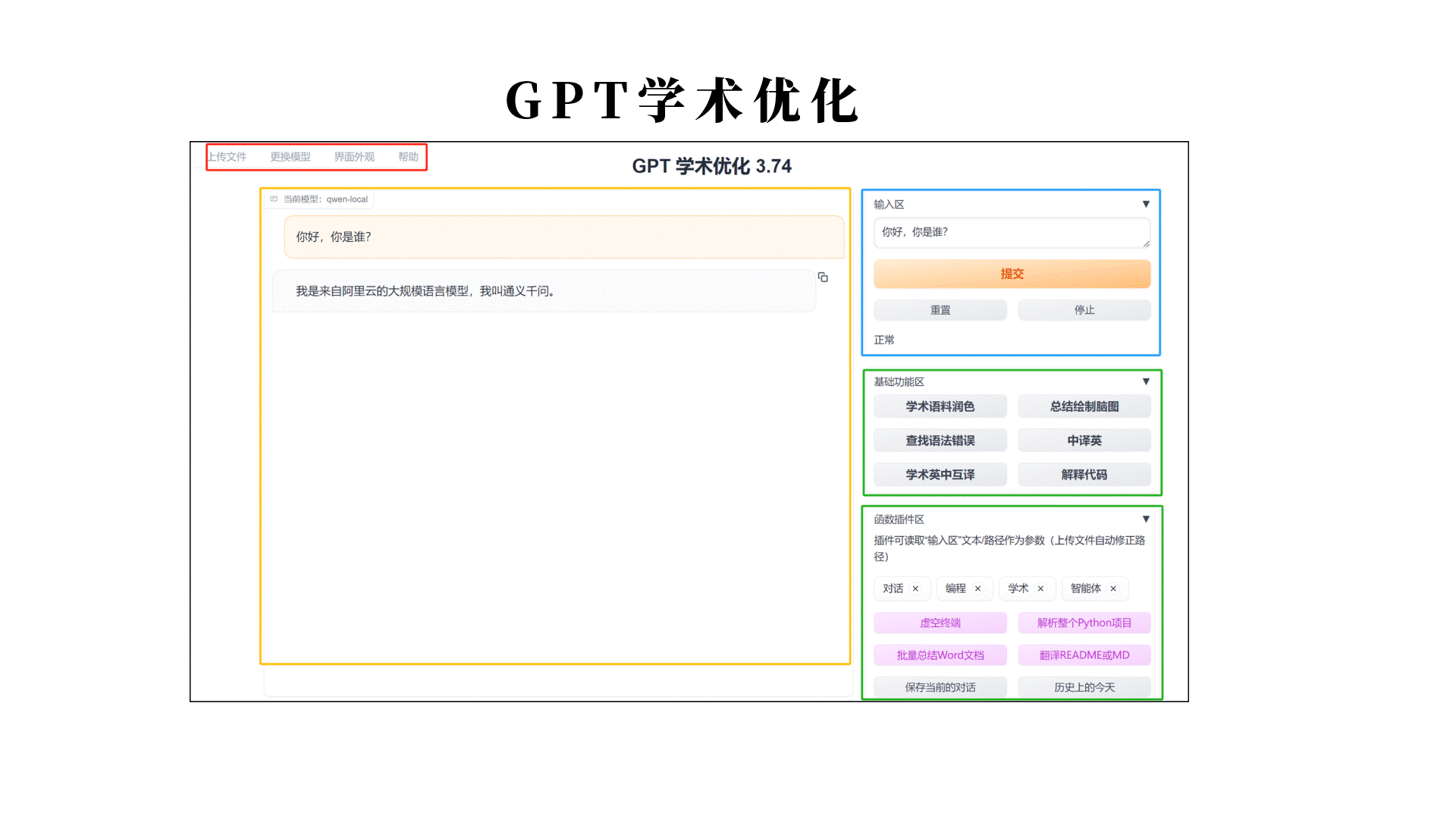
In the LLM chapter, it includes 4 LLM deployments and code analysis and an LLM industry application - GPT Academic (GPT Academic Optimization) , LLM includes four major mainstream models of open source in China, Qwen, ChatGLM, Baichuan and Yi .
Industry is implemented. With tools and scenarios, we must make it valuable and become usable and useful algorithm services. Therefore, it is common to strip out the training framework and heavy framework like pytorch for deployment, acceleration and quantification. This chapter will introduce the principles and use of ONNX and TensorRT , and at the same time, use TensorRT to analyze the concept of quantization, the practical and principles of PTQ and QAT quantization .
I believe that through the learning of the first, middle and next articles, it can help the introductory students avoid many detours, quickly master PyTorch, have the ability to stand alone, can select algorithm models based on actual scenarios, and can deploy and apply the models to form a closed loop, and open up the entire process.
Clear structure: The whole book is divided into three parts: the first part (introduction), the second part (application), and the next part (implementation), gradually guiding readers to learn in depth.
Combination of theory and practice: Not only provides theoretical explanations, but also allows readers to apply theory to practice through rich project cases.
Rich practical cases: Provide practical cases in multiple fields such as computer vision, natural language processing and large language models.
Systematic coverage: covers PyTorch basics, computer vision basic tasks, natural language processing basic tasks, large language model basics, and inference deployment framework.
Wide applicability: suitable for AI self-study students, AI product managers, current students and cross-field people to read, meeting readers with different backgrounds and needs.
In order to enhance the reading atmosphere of readers and provide communication channels, a QQ communication group was specially established.
To ensure the quality of communication within the group, you need a password to join the group. Please check the code
In the near future, we will share the latest technical articles in the group, including CV project practical combat, LLM reasoning and deployment, RAG systems and other cutting-edge technologies. Welcome to join the technical exchange.
A group: 671103375 (full)
Group 2: 773031536 (full)
Three groups: 514974779 (full)
Four groups: 854620826
This work is licensed under the Creative Commons Attribution-Noncommercial Use 4.0 International License.
Stop update record:
| date | schedule | Reason for stopping update | Stop time |
|---|---|---|---|
It is expected to continue until November | |||