OpenPlexity Pages
1.0.0

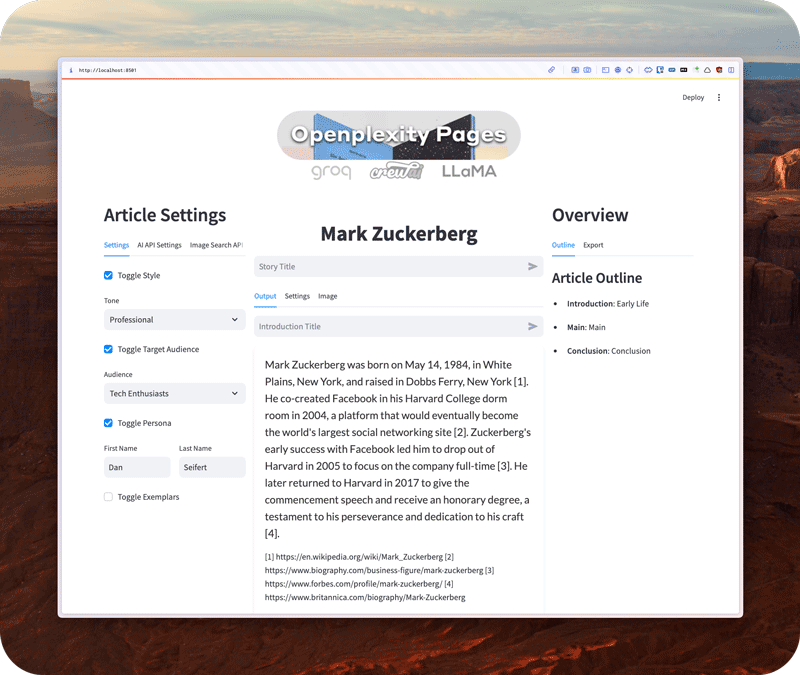
Open-Source Perplexity Pages
@alxfazio
·
@mutatedmindcom
·
@breezeight
OpenPlexity Pages serves as an open-source alternative to Perplexity Pages, with the aim of transforming your research into visually appealing, comprehensive content. Although the system is not capable of producing publication-ready articles, which often necessitate a substantial number of revisions, experienced editors may find it beneficial during their initial writing phase.
OpenPlexity Pages empowers creators in any field to share knowledge:
Groq API Key,Seperapi API Key.Follow these instructions to set up and run OpenPlexity Pages using Poetry.
First, ensure you have Poetry installed. If not, install it via pip:
pip install poetryOnce Poetry is installed, navigate to your project directory and install the dependencies:
poetry installNext, you need to create a .env file in the root directory of the project. This file will store your pplx_api key. Use the following command to create and add your API key to the .env file:
$ echo "GROQ_API_KEY=<your-groq-api-key>
BASE_URL=https://rentry.co
SERPER_API_KEY=<your-serper-api-key>" > .envTo run the application, use the following command:
poetry run streamlit run openplexity_pages/app.pyAnd that's it! Your application should now be up and running. Enjoy exploring OpenPlexity Pages!
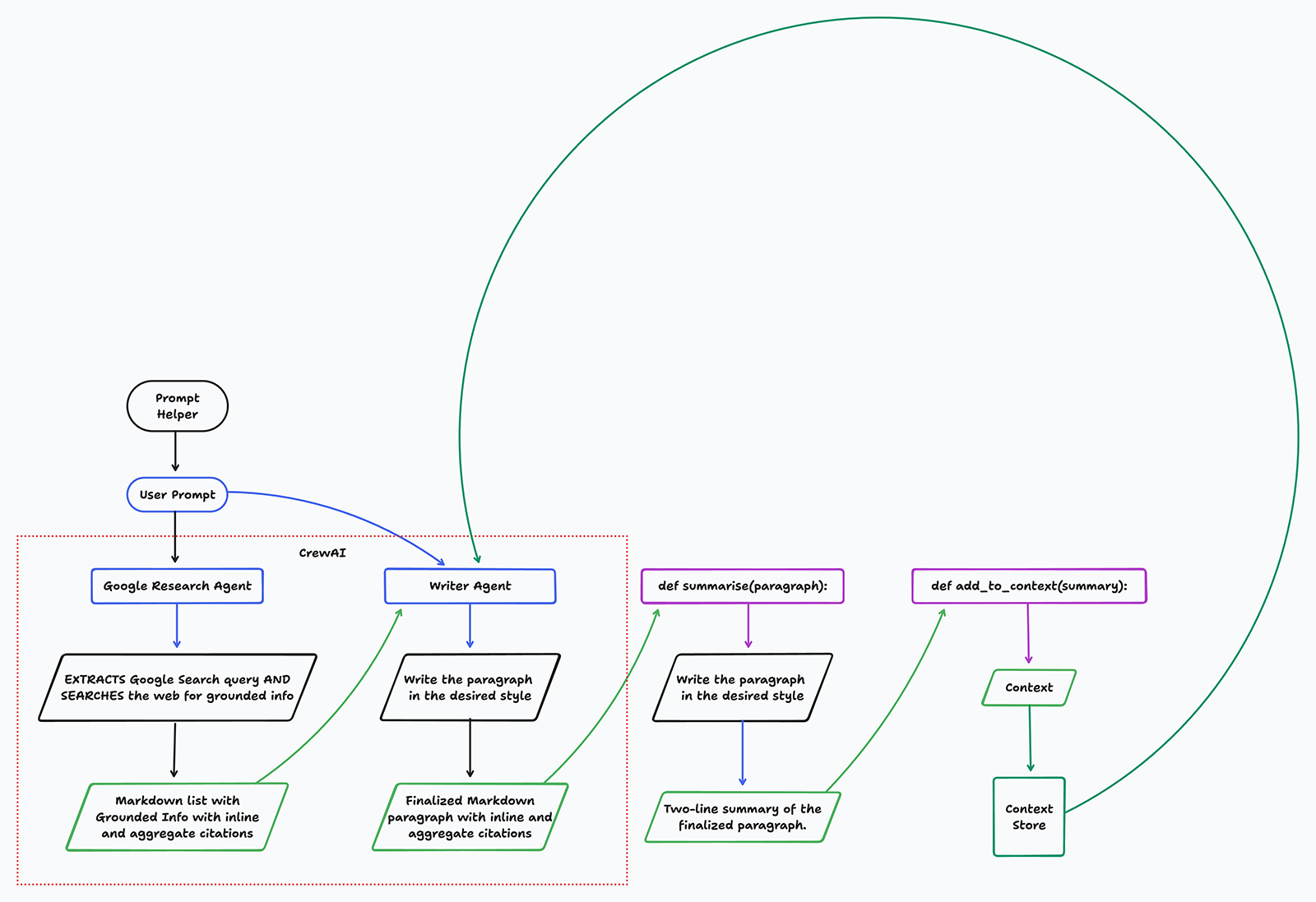
OpenPlexity Pages thrives on community contributions. Whether you're fixing bugs, adding features, or improving docs, we welcome your input! Check out our CONTRIBUTING.md for guidelines.
Love OpenPlexity Pages? Here's how you can help:
While Perplexity Pages offers a polished, hosted solution, OpenPlexity Pages brings the power of AI-driven content creation to the open-source community. We believe in the potential of collaborative development and the importance of data privacy.
With OpenPlexity Pages, you have the freedom to host your own instance, contribute to its development, and create content that educates, inspires, and engages your audience—all while maintaining full control over your data and the tool itself.
Let's see what we can create together.
We are very grateful to MutatedMind for leading the UI development.
MIT
Copyright (c) 2024-present, Alex Fazio





